Rochester, MN · Garage Door Service
Rochester Garage Door Pros explains what a service call actually covers - from spring checks to track alignment - for homes built 1947-2001 in Rochester, MN.
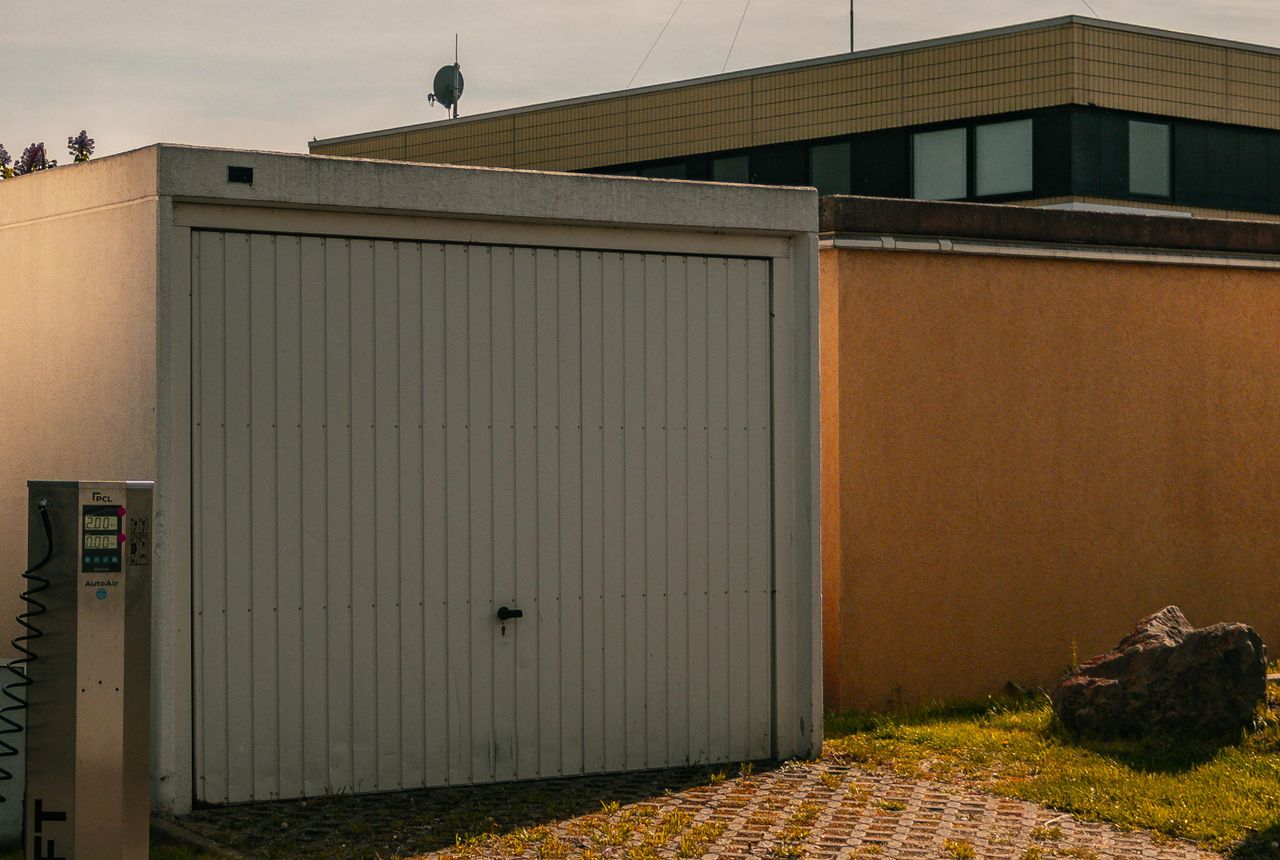
Most of the housing here went up between 1947 and 2001, with the bulk of it dating to the 1980s and 90s across the seventeen named areas we run calls in. That range matters because it means three or four different generations of garage door hardware are still in service on the same block. A house built in the early 80s might still have its original extension springs and a set of steel rollers that were never swapped out. A house from the late 90s might have a torsion setup with a newer opener bolted on top, but the original track never got re-shimmed when the slab settled.
A service call isn't one fixed checklist because of this. We're not walking into a subdivision where every door is the same age and the same brand. We're looking at what decade the door is from before we touch anything, because that decade tells us what's likely to fail next - cables that were never rated for the spring cycle count they've seen, or an opener logic board that's simply reached the end of its run. The honest version of a service call starts with figuring out which era of hardware we're dealing with, not with a generic tune-up script.
Rochester sits in a climate band that gets classified as cold and severe, which is why torsion springs here take a different kind of beating than they would somewhere with a milder winter. Steel contracts in the cold, and a spring that's already fatigued from twenty years of cycles loses tension faster once temperatures drop and stay down. That's part of why late-winter and early-spring calls tend to be spring failures rather than opener failures - the hardware was already close to done, and the cold finished the job.
Weatherstripping and bottom seals take a hit too. On a lot of the older housing stock, the seal was replaced once, maybe twice, over the life of the door, and in a cold-severe climate a cracked or flattened seal means the garage floor sees frost and moisture it wasn't built to handle. We check the seal on every call, not because it's glamorous work, but because a two-dollar part failing quietly does more damage over a winter than most owners realize. None of this is exotic. It's just what cold does to steel and rubber, year after year, in a place that gets a real winter.
The honest limitation first: if a torsion spring has already snapped and the door is sitting on a bent track, we're not going to tell you a fifteen-minute adjustment fixes it. Some of these jobs are replacement jobs, and pretending otherwise to sell a cheaper service call isn't something we do.
Where we see owners go wrong most often is trying to match new hardware to an old door instead of asking whether the door itself is worth matching to. With a median household income of $91,612 in this area, plenty of homeowners can afford a full opener replacement instead of nursing along a stripped gear on a unit that's outlived its parts - but a lot of people default to the cheapest fix because that's what the last company quoted, not because it's actually the better spend over five years.
The other common mistake is skipping the track and roller check because the door still opens fine. Across the 16,098 households in our service area, 10,381 are owner-occupied houses - the kind with an attached garage and a door we might get called out to - and on the older end of that stock, a door that 'still opens fine' is often running on a track that's a quarter-inch out of plumb and grinding rollers down faster than it should.
Call when the door makes a new noise it didn't make last month, when it hesitates on the way up, or when one side visibly lags the other - that last one is almost always a spring or cable issue and it doesn't get better on its own. Don't wait until the door is stuck down; a partial failure is a cheaper call than a full one.
We run calls out to Byron, eight miles off, and out past Chatfield at nineteen miles, which is about the edge of what we call a same-day radius. Places like Oronoco, Stewartville, Eyota, Kasson, and the string of small towns further out - Elgin, Mantorville, Pine Island, Mazeppa, Dover, Jordan, Millville, Plainview, Dodge Center - all fall somewhere inside that range, along with the area just northwest of the city itself. If you're closer in, same-day is usually realistic. If you're out toward the edge of that list, it's worth calling in the morning rather than waiting until evening, since routing gets tighter later in the day.
We look at what era of hardware is on the door - houses here run from 1947 to as recent as 2001, mostly clustered in the 80s and 90s, and each era used different spring and cable setups. Matching the fix to what's actually installed, rather than a generic newer part, is most of the job.
Rochester falls in a cold-severe climate band, and steel springs lose tension faster in sustained cold, especially ones already fatigued from years of cycles. It's a real factor here, not a sales line - late winter is when we see the most spring calls.
Sometimes, yes. If the spring's gone and the track is bent from the same event, or the opener is old enough that parts are hard to source, replacement can cost less over time than repeated repairs. We'll tell you straight if that's the case rather than stack small fixes on an old door.
Yes - our service area reaches out to towns like Byron, Stewartville, Kasson, and several smaller communities within about 18 to 19 miles. Response time depends on how far out you are and what time of day you call.
Call now or request a free quote - same-day service on most repairs, upfront written pricing.