Rochester, MN · Garage Door Service
Rochester Garage Door Pros installs garage doors sized for homes built 1947-2001 and rated for Minnesota's severe cold, serving Rochester, MN homeowners.
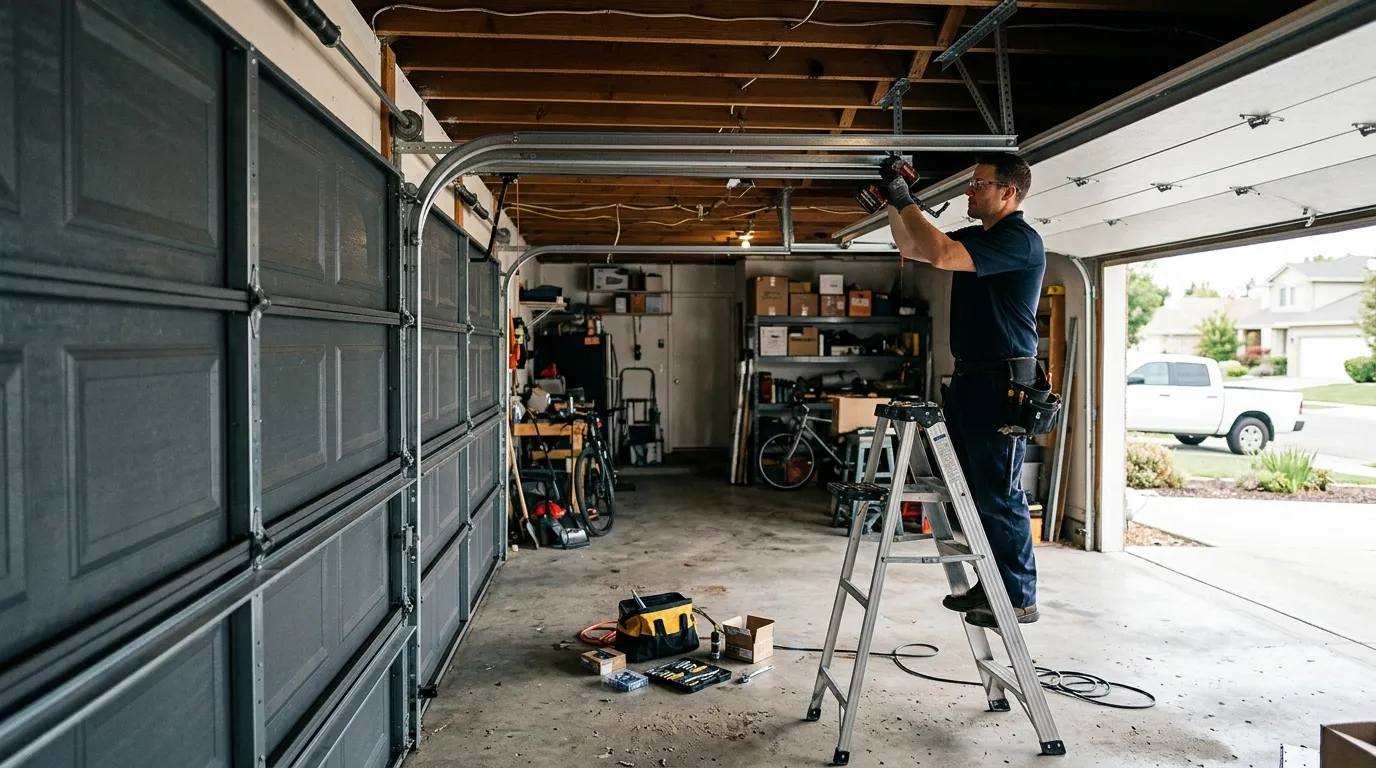
Swapping weatherstripping or tightening a loose hinge is a Saturday job for most owners, and we won't pretend otherwise. Installing a full garage door is a different animal. A double door section runs well over a hundred pounds, and the torsion spring that lifts it is wound under enough tension to break bones if it lets go while you're guessing at the winding bar. That's true anywhere, but it matters more here because so much of Rochester's housing stock dates back to the 1980s and 90s - the original tracks, jambs, and headers were built to a spec that doesn't always match what comes in a box from the home center today. Framing settles over forty years. An opening that looks square often isn't, and a panel that doesn't sit flush on day one will bind, sag, or blow cold air through the gap by the first hard freeze. We'll say plainly what we don't do: we don't sell doors for pickup-and-install-yourself, and we won't talk you through a phone-guided DIY torsion spring swap. If you want to do the trim work, weatherstrip, or paint the jambs yourself, that's fine - just let a trained set of hands handle the spring and the panel hang.
We don't post a flat number for installation because the honest answer depends on what's already in the opening. A single-car door on original 1980s hardware is a different job than a double door where the header needs reinforcing or the opener wiring has to be rerouted. Insulation level matters too - given how cold it gets here, most owners installing new ask about a double-wall steel door with a foam core rather than the single-layer panel that came with the house, and that changes the material cost. Track style, window inserts, and whether the old opener gets reused or replaced all move the number as well. What we can tell you is that a real quote takes a look at the actual opening, not a phone guess, because framing on a house built in 1982 doesn't behave like framing on something built last year. We'll walk the opening, check the header and jamb condition, and give you a number before anyone touches a tool. If a repair would genuinely cost less than a new install and hold up, we'll say so - we'd rather keep a customer for the next job than sell a door that wasn't needed yet.
The calls we get for installation instead of repair usually start the same way: the door still opens, but it's clearly done. Daylight shows around the edges even when it's shut tight. The bottom panel has bowed enough that the weatherseal doesn't touch the slab anymore, so cold air rolls straight into the garage - and in a lot of these houses, that garage shares a wall with a mudroom or laundry room, so the cold doesn't stop at the door. Owners also mention the opener straining harder than it used to, working against a panel that's warped just enough to bind in the track. None of that is a one-part fix. When the steel itself has flexed from decades of freeze-thaw cycling, replacing a roller or a cable buys a few months at best. That's the point where we stop talking repair and start talking installation - not because it's the bigger job, but because patching a door that's structurally tired usually costs more over two winters than replacing it once.
Rochester's housing stock runs from 1947 up through 2001, with the median build year landing at 1982, and most of that is concentrated in 1980s and 90s construction spread across the area's neighborhoods. That means a huge share of the doors we look at are original equipment - steel panels and hardware sized to a 40-year-old opening, sitting in a climate the government rates as severe cold. Steel contracts hard in a Minnesota winter and expands again every spring, and forty seasons of that cycle is what turns a straight panel into a bowed one. It's also why torsion springs on these houses tend to fail without much warning - the metal fatigues faster when it swings through that wide a temperature range every year. Across the wider service area there are 16,098 households and 10,381 owner-occupied houses, a lot of them built in that same window, which is why replacement calls cluster by decade of construction more than by neighborhood. Byron sits about eight miles out and Northwest Rochester about five miles NNW - both inside the radius where we see the same era of door reaching the end of its service life at roughly the same time.
If the panel is visibly bowed, the weatherseal no longer touches the floor when closed, or the opener is straining against a bind in the track, you're usually past the point where a repair holds. On a door original to a 1980s or 90s build, those symptoms together usually mean the steel itself has fatigued, not just one part.
We get asked this a lot given how cold it gets here. Most owners installing new choose a double-wall steel door with a foam core over the single-layer panel that shipped with older houses, mainly because the garage often borders living space and the old thin steel does nothing to slow heat loss.
We don't split the job that way. The panel weight and torsion spring tension are the dangerous part of installation, and that's exactly the part we won't hand off. If you want to do trim, paint, or weatherstripping yourself, that's fine.
Steel doors flex with every freeze-thaw cycle, and a door built in the 1980s or 90s has been through roughly forty of them. That repeated expansion and contraction is what eventually bows a panel or fatigues a torsion spring, and it tends to show up around the same age across houses built in that window.
Call now or request a free quote - same-day service on most repairs, upfront written pricing.