Rochester, MN · Garage Door Service
Garage door repair for Byron, MN, run from Rochester eight miles out. Newer 2000-era homes, torsion springs, and cold-climate opener faults, fixed on site.
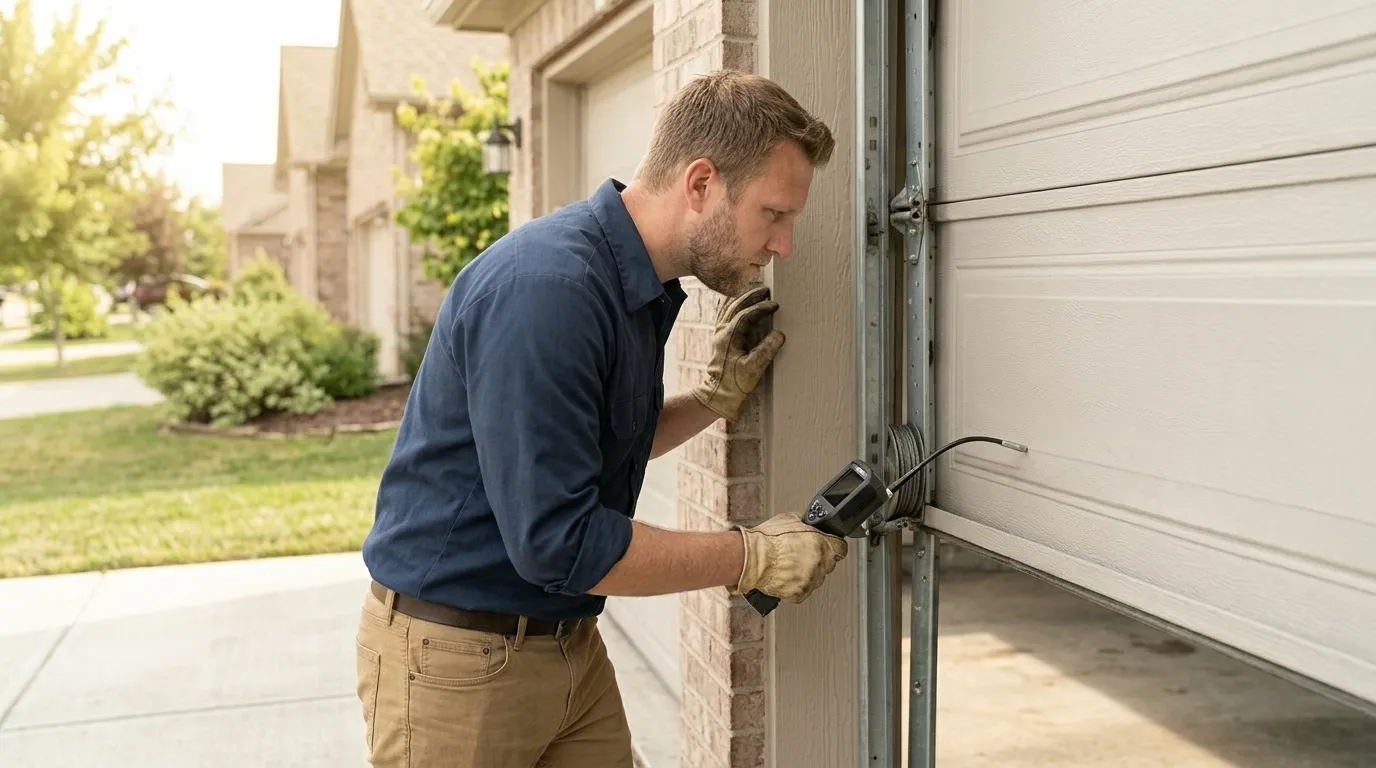
Byron sits eight miles from our Rochester shop, a straight run down before you hit the turn into town. That's close enough that a broken spring call here doesn't sit on the board waiting for a bigger cluster of jobs to justify the drive - it's one of the shorter trips on the map, alongside Northwest Rochester five miles out. We don't keep a branch or a second truck stationed in Byron itself, so every job starts from Rochester, but the distance rarely changes how the job runs once we're in the driveway. What it does change is scheduling: a Byron call slots in easily between Rochester jobs on the same side of town, which keeps things moving instead of stacking up.
What matters more than the miles is what's waiting at the end of them. Byron's housing stock skews newer than most of the towns we cover - median year built around 2000, a couple decades younger than the broader service area's 1982 median. That means different doors, different openers, and different failure patterns than what we see on an older Rochester street, and it's worth knowing before the truck even leaves the yard.
A door built around 2000 usually means a steel sectional door on a torsion spring system, paired with a chain or belt-drive opener that has a circuit board instead of the older mechanical relay setups. That's good news in one way - the hardware is more standardized and parts are easier to source than on a door from the 1960s stock you'll find closer to central Rochester. It's bad news in another: these openers have sensors and logic boards that fail in ways a spring never will. A door that reverses for no reason, or won't respond to the wall button but works fine on the remote, is almost always an opener issue, not a spring or cable issue, and we diagnose it that way first rather than assuming the worst.
On the mechanical side, springs on these newer double doors are still under real tension and still snap without warning, usually on the coldest morning of the year. The fix is the same basic job it's always been - measure the wire, cut the new spring to match, wind it to the right number of turns - but the winding cones and end bearing plates on 2000s-era doors are more standardized across brands, which usually means less guessing about what's actually installed.
Tell us the door's approximate age and whether it's the spring, the opener, or the track giving trouble, and we can usually tell you what parts to expect before the truck leaves Rochester. Since we're not stationed in Byron itself, a same-day slot depends on the rest of that day's route, not on anything specific to your address - we'll be straight with you about the window when you call rather than promising a time we can't back up.
See more on service across Byron and the surrounding area, or check the full Rochester repair page for what we cover outside this one job type.
This area sits in a severe cold climate band, and that shapes the failure list more than the age of the door does. Torsion springs lose flexibility in sustained cold and are far more likely to snap on a sub-zero morning than in July - steel contracts, the coil binds slightly tighter, and the extra strain finds the weakest point in the wire. On newer openers, the photo-eye safety sensors near the floor are the other cold-weather failure point: condensation and frost on the lenses reads as an obstruction, and the door won't close, or reverses right after it starts down.
We also see nylon rollers going brittle and cracking in the cold on doors that are otherwise in good shape - a five-minute swap once you know that's the noise you're hearing. None of this is unique to any one street in Byron; it's a function of a Minnesota winter working on hardware that's mostly ten to twenty-five years old across the area, not decades older like some of the surrounding towns.
The truck carries common torsion springs, standard rollers, cables, and the sensor and logic board parts that fit most openers installed since the late 1990s, which covers a good share of what's on Byron doors. What we don't carry is everything - a specific circuit board for a less common opener brand, or a spring wound to an unusual length, sometimes means a short order delay rather than a same-visit fix. We'll tell you straight if that's the case rather than making a return trip sound like a five-minute job. For a door in otherwise good shape, that's usually a small wait. For a door where the opener and the springs are both failing at once, replacement often makes more sense than chasing parts piece by piece, and we'll say so.
It's about eight miles from our Rochester base, one of the shorter drives on our route. It doesn't change how the repair itself goes, but same-day availability depends on the rest of that day's jobs rather than anything specific to Byron, so we'll give you a straight window when you call.
Generally yes. Byron's housing runs newer, with a median build year around 2000, so most doors are steel sectional with torsion springs and circuit-board openers. Older Rochester stock more often has older relay-style openers and different spring hardware, so the failure patterns aren't identical.
This area sits in a severe cold climate band, and torsion springs lose flexibility as steel contracts in sustained cold. That extra strain tends to find the weakest point in the coil, which is why snapped springs cluster on the coldest mornings rather than happening evenly through the year.
Most of the time, yes - common springs, rollers, cables, and the sensor and board parts that fit openers from the late 1990s onward. A less common brand's circuit board or an unusual spring length can mean a short order delay, and we'll tell you upfront if that's the case.
Call now or request a free quote - same-day service on most repairs, upfront written pricing.