Rochester, MN · Garage Door Service
Byron's houses run newer than the rest of the Rochester area, and that changes what breaks. Service is dispatched from Rochester, 8 miles out.
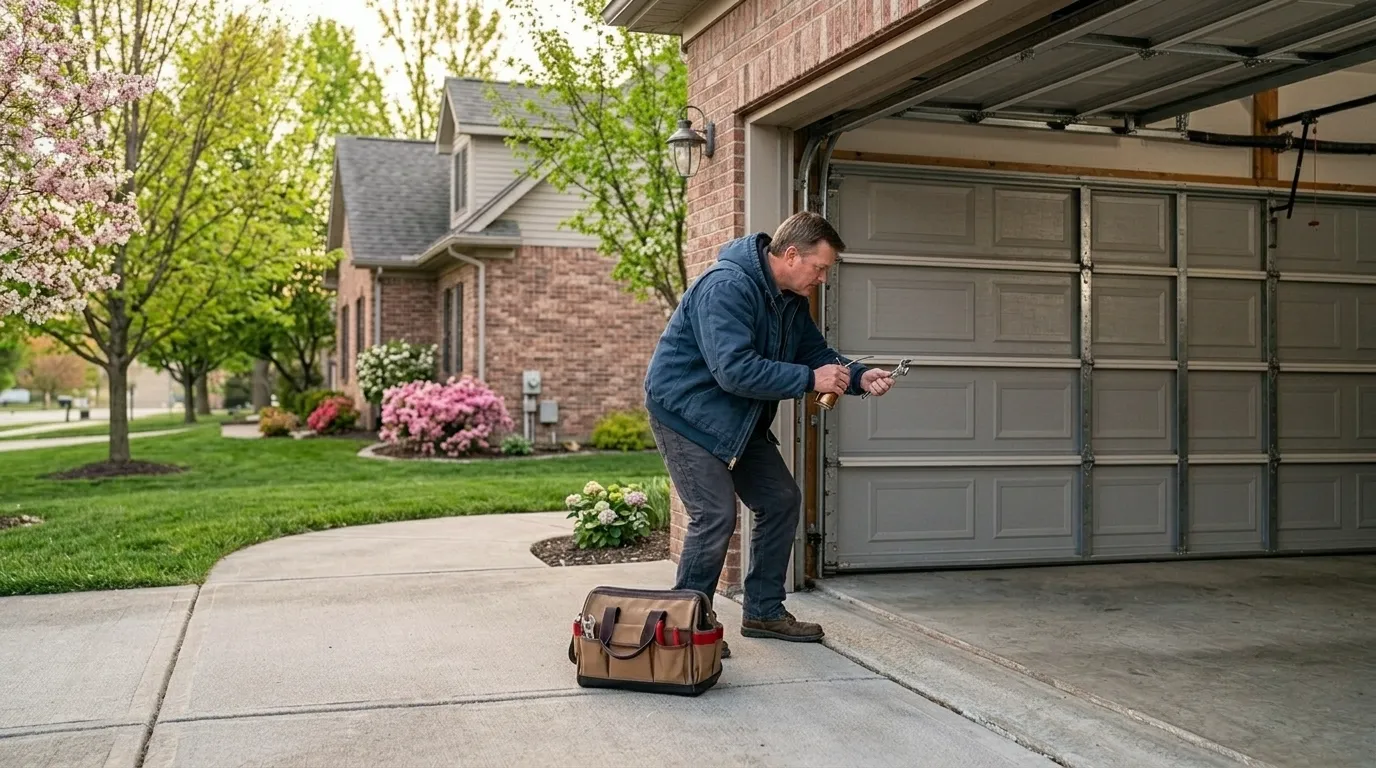
Byron is a smaller town than most of what we cover out of Rochester - about 2,421 households, not the tens of thousands you'd find in the bigger suburbs on our list. That size matters for the kind of calls we get. A town this compact, built out mostly around the year 2000, doesn't generate the same mix of jobs as an area with houses going back to the 1940s. You don't get the full spread of eras - you get one dominant one, and the doors and openers that came standard when those houses went up. Most of what we see in Byron is the same generation of hardware: steel sectional doors, torsion springs mounted the way manufacturers started doing it in the late '90s, and openers with the safety sensor pairs that became mandatory around then. Fewer oddball setups, fewer parts we have to hunt for. Compare that to the wider Rochester service area, where the housing median lands around 1982 across a much bigger stretch of build years - Byron sits noticeably newer than that average. It's a smaller book of work, but a more predictable one.
Because most Byron garage doors went in during or after the run-up to 2000, the fix usually isn't about finding parts for something long discontinued. It's steel panel doors, factory-insulated, running on roller tracks that were standard for that era - nylon or steel rollers, torsion springs sized for a lighter or heavier door depending on insulation package. Openers from that build wave are chain or belt drive with photo-eye safety sensors low on the track, and those sensors are usually the first thing to act up, not the door itself. A repair here is more often an opener issue - logic board, sensor alignment, a drive gear worn down - than a full spring replacement, though springs still fatigue and snap on their own schedule regardless of the house's age. We diagnose on site: check the sensors, check spring tension, check the track alignment, before assuming the worst. Not every noisy door needs a new opener. Sometimes it's a $20 sensor bracket that shifted.
There's no branch office in Byron - the crew and the truck come out of Rochester, about 8 miles down the road. That's a short run, but it's worth knowing this isn't a town with its own dedicated crew sitting idle waiting for a call. We schedule Byron jobs the same way we schedule the rest of the service area: book the visit, we route a truck out, and we work the job on site. If you need to see who else nearby we cover, the full list of towns is on our service area page. For anything outside a single service call - new installs, full opener swaps, whole-house jobs - that's covered on the main Rochester garage door service page, not here.
Minnesota winters hit Byron the same as anywhere in this part of the state - severe cold is the baseline, not the exception. On a newer, better-sealed door that mostly means the opener's electronics and the sensor eyes take the hit before the door itself does: cold shrinks lens gaskets, frost fogs the sensor pairs, and the opener reads it as an obstruction and refuses to close. Springs on newer torsion setups don't fail as often from age, but a hard cold snap will still stiffen the coil enough that a marginal spring finally lets go. Because Byron's stock runs younger than the area average, we see fewer doors sagging from decades of wear and more doors failing at a single point - a sensor bracket knocked out of alignment, a drive belt that's stretched, a logic board that's given out. It's a narrower set of likely causes, which usually means a shorter diagnosis, but it still means a truck has to come out and look, since a phone description of
Because Byron's houses cluster around one build era, the openers and door hardware we run into are mostly current-production parts we carry as a matter of course - standard torsion springs sized for that generation of door, common sensor units, standard roller sets. That works in Byron's favor for turnaround. Where it gets slower is if a house here has an older door - not the norm, but they exist - matching hardware for something built well before 2000 can mean ordering a part that isn't on the truck. We won't pretend every job closes out on the first visit. If the part isn't standard stock, we tell you that up front rather than guessing at a timeline we can't back up.
No. We're based in Rochester and drive out to Byron, about 8 miles, for every call. There's no local branch or drop-off point in town - booking works the same as it does for the rest of the service area.
Byron's housing stock is newer, centered around the year 2000, versus a median closer to 1982 across the broader service area. Newer doors and openers tend to fail at electronics and sensors rather than from decades of wear on springs and tracks.
Differently, not less. Severe cold still stiffens springs and can fog or freeze photo-eye sensors even on a well-insulated, newer door. The failure point shifts from the door itself toward the opener's sensor pair and electronics.
Usually, but not always same-day. Most of what we stock matches the common hardware from Byron's dominant build era. An older or less common part may need to be ordered, and we'll say so on site rather than guess.
Call now or request a free quote - same-day service on most repairs, upfront written pricing.