Rochester, MN · Garage Door Service
Byron homes built after 2000 need different garage door hardware than older Rochester-area houses. See what a new install involves, costs, and takes to book.
Byron's median household income runs $121,681, well above the $91,612 median for the rest of the Rochester service area. That gap matters because it changes where the repair-or-replace line falls. At that income level, most owners here don't keep nursing a door along with a third spring or a fourth roller kit - once a repair bill starts closing in on half of what a new door costs, replacement wins the math, and Byron homeowners tend to make that call sooner than the area average.
The other number that shapes the job is the housing stock itself. Most houses in Byron went up after 2000, a good two decades newer than the 1982 median build year for the wider service area. That means standard builder openings, factory-set headroom, and openers that are only now reaching the age where the drive gear or the logic board starts to go, not the door itself.
Byron sits about 8 miles from Rochester, close enough that we can fit a full install and a same-day tear-out on one trip. We're not based in Byron - every job here is a drive from Rochester - so the schedule runs around when trucks are already routed this direction, not a standing local slot.
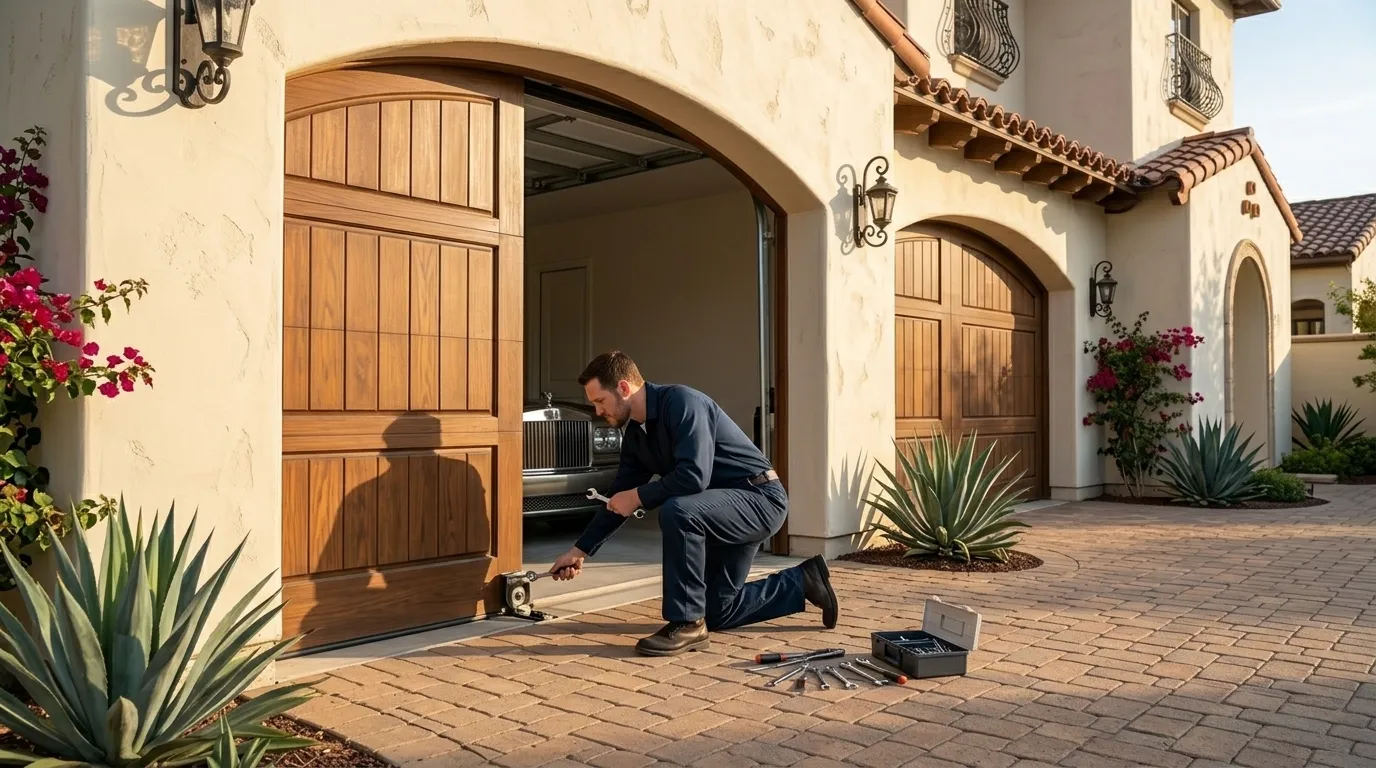
A new install on a 2000s-era Byron house usually starts easier than an older one: the framing is square, the header height matches what most residential doors are built for, and there's rarely a need to reframe the opening or rebuild jamb trim the way you sometimes do on a much older house. The work still runs the same order - pull the old door and track, check the header and jambs for square, set new track and hinges, hang the new sections, balance the torsion spring to the door's actual weight, and program the opener travel limits and safety sensors.
This area sits in a severe cold climate band, so insulation isn't optional the way it might be somewhere milder. A door without a factory-fitted insulated panel and a tight bottom seal is going to fight you every January - cold floors in the garage, condensation on the inside of the panels, an opener straining against a door that's stiffer than it should be at 10 below. We spec insulated doors with a sealed bottom astragal as the default here, not an upsell.
One limitation worth saying plainly: if the existing opening is non-standard - a custom width from an older addition, for instance - the door itself may be special order, and that adds lead time we can't shorten.
Every visit to Byron is a trip out from Rochester, so we don't hold a standing local queue the way a shop physically in town might. What we can do is measure before the truck rolls - opening width and height, headroom, backroom clearance, and whether the opener needs replacing along with the door - so the visit itself is the install, not a second trip to figure out what parts to bring.
Because Byron is only about 8 miles out, it's usually easy to pair with other stops in the same corner of the service area on a given day, which keeps the job moving instead of waiting on a dedicated slot. Bring the make and rough age of your current opener if you know it - on a house built since 2000, a lot of openers are original to construction, and knowing whether it's a chain-drive unit from that era changes what we load on the truck.
See the full rundown of what we cover out of Rochester on the main installation page, or check the Byron service page for what else we handle in this part of the area.
On a house built in the early 2000s, the most common call isn't a bent panel - it's an opener that's outlived its gears or logic board, paired with a torsion spring that was never rated to last forever and is now 20-plus years into a job it was built to do for roughly that long. When both go at once, it looks like a door problem but it's really two separate failures on the same schedule, because they were installed the same week the house was framed.
Builder-grade doors from that era are also a common weak point. Developers building out a neighborhood in one push often specified the lightest door that met code, with minimal insulation and a bottom seal that hardens fast in a cold climate. On a door like that, you'll see daylight at the corners before you see a crack in the panel.
Cable fraying and roller wear show up earlier on driveways with a slope, since the door cycles under more load. None of this is unique to any one house - it's what 20-plus years does to hardware that was built to a construction-grade spec, not a premium one.
We carry standard torsion springs, common roller and cable sizes, and openers that fit the header clearances typical of houses built since 2000 - which covers most of what a Byron call needs without a special order. Standard-width insulated door sections in common colors are stocked too, since that's what most of the newer stock in this part of the area takes.
Where we run into lead time is anything custom: a non-standard opening width, a specific panel style to match an existing door on a shared-wall garage, or a color match outside the common line. If your house has a wider-than-standard bay or a low-headroom setup that needs a different track configuration, expect the parts to come from a supplier order rather than off the truck, and expect that to add days, not hours. We'd rather tell you that up front than promise a same-visit fix we can't back up.
About 8 miles. We don't have a location in Byron itself - every job is a drive out from Rochester - but the distance is short enough that install and tear-out usually fit in one visit without adding a second trip charge for travel.
Often, yes. Most Byron houses were built after 2000, versus a median build year of 1982 across the wider service area, so openings tend to be standard modern widths with factory headroom clearance, and openers are only now reaching the end of their rated life rather than needing full rewiring or reframing work older houses sometimes need.
Depends on what's broken. With Byron's median household income at $121,681, well above the area's $91,612 median, most owners here replace once a repair bill starts approaching half the cost of a new door rather than keep patching an aging unit. A single spring or roller job is still almost always worth repairing.
This area sits in a severe cold climate band, so yes - an insulated panel with a sealed bottom astragal keeps the garage floor warmer, cuts condensation on the inside of the panels, and takes strain off the opener on the coldest days. We spec insulated doors as the standard here, not an add-on.
Call now or request a free quote - same-day service on most repairs, upfront written pricing.