Rochester, MN · Garage Door Service
Broken spring or stuck door in Kasson? Rochester Garage Door Pros drives 14 miles out to fix doors from Kasson's 1990s building boom, honest about what can and can't be saved.
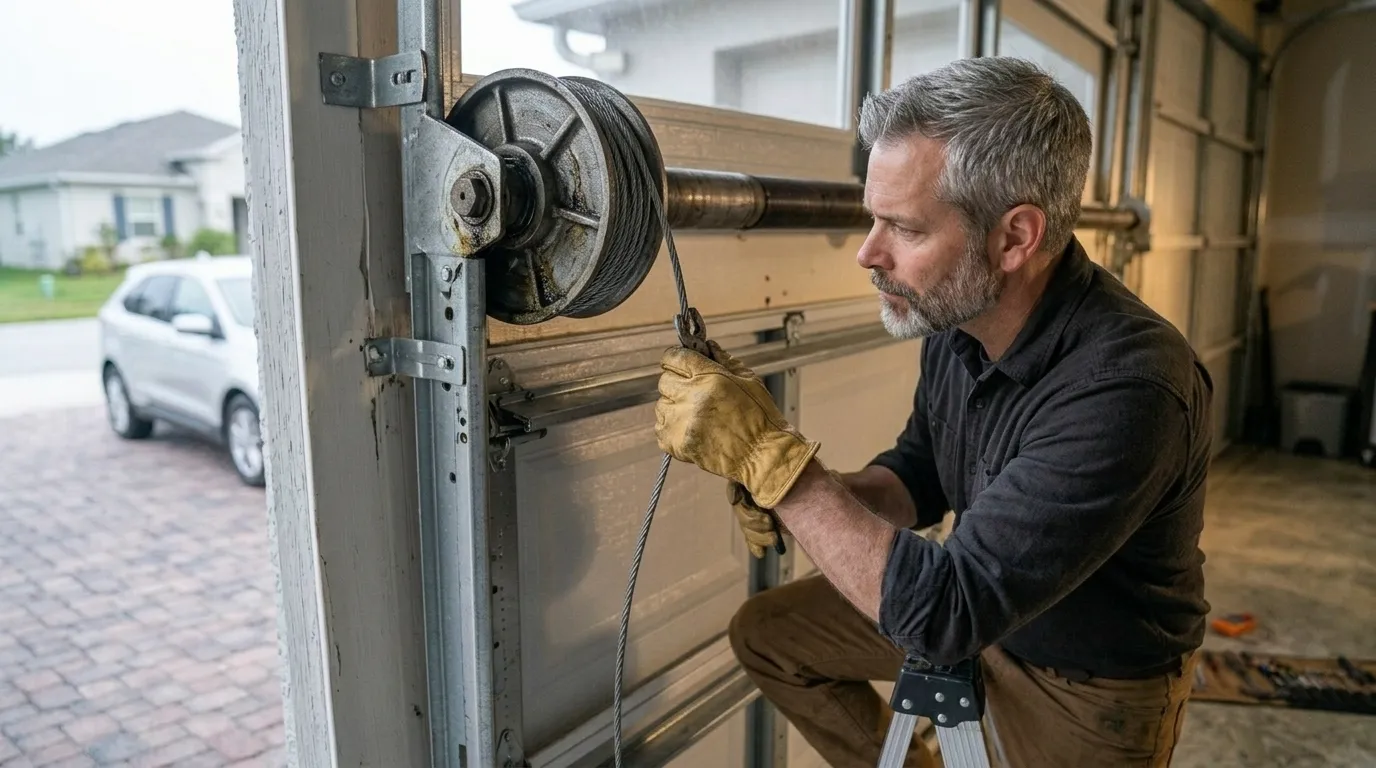
Kasson's housing stock centers on 1993, which puts most doors in town on the back half of their working life rather than the front. A door and torsion spring installed when a house went up in the early '90s has usually seen twenty to thirty years of cycles by now - open, close, open, close, twice a day, every day. That's the range where springs snap without warning and steel panels start showing the dents and rust bubbles that come with age, not abuse.
We run this call from Rochester, 14 miles south of Kasson. There's no branch office here and we won't pretend otherwise - the truck comes from Rochester every time, loaded with the springs, cables, and rollers sized for the doors that went up on this side of the county in the '80s and '90s. That drive is part of the job, not a delay we hide.
What that means for you: we're not guessing at hardware when we get there. A house built in 1993 almost certainly has torsion springs on a standard 7-foot steel door, not the older extension-spring setups you'd find in a much older neighborhood, and we stock to that.
The calls we get from Kasson break into a short list. A torsion spring snaps - you'll hear a bang, sometimes loud enough to bring you into the garage, and the door won't budge or crashes down uneven. A cable frays and jumps the drum, so one side of the door hangs lower than the other. The opener runs but the door doesn't move, which usually means a broken spring is taking the whole load off the motor. Or the door reverses itself before it touches the floor, which points to a misaligned track or a safety sensor knocked out of line.
None of these are jobs to force through. A door that's fighting you on a broken spring can drop the moment you get it a foot off the ground, and a garage door weighs more than most people expect - two to three hundred pounds isn't unusual for a steel double door from this era. If the door won't move smoothly, stop trying to move it and call.
Two things stack on top of each other in Kasson. First is age: doors and springs from the early-to-mid '90s are past their expected cycle count now, and metal fatigue doesn't announce itself before it lets go. Second is the winters. This part of Minnesota sits in a severe cold climate band, and torsion springs lose flexibility as steel contracts in the cold - a spring that's been weakening for years is far more likely to snap on the first hard cold snap of the season than on a mild July afternoon.
The combination is what makes late fall and deep winter the season we hear from Kasson the most. A spring that's been quietly fatiguing since 1998 doesn't need much of a push once the temperature drops. Ice buildup at the bottom seal and stiff, cold-thickened grease on rollers and tracks add friction that makes an opener strain harder than it should, which shortens the life of gears and belts too.
Some of it, yes. If the door won't open, pull the red emergency release cord and check whether you can lift it by hand - if it's heavy and unbalanced, that's your broken spring right there, and lifting it manually is fine for getting a car out but not a fix. Clearing ice or debris from the track, checking that the sensors near the floor are aligned and the lenses are clean, and tightening loose visible bolts are all reasonable for a homeowner.
Spring and cable work is not. Torsion springs are wound under enough tension to cause serious injury, and there's no safe shortcut with the tools most people have in a garage. We'll say plainly: if you're not already comfortable working under tension with the right bars, don't start. That's not us protecting business, it's the honest limitation - some repairs on this specific hardware need the winding bars and clamps we carry on the truck, and a mistake here is the kind that puts someone in the hospital, not just delays the fix.
We carry torsion springs sized for standard 7-foot steel doors, the size you'll find on most garages built in Kasson through the '80s and '90s, along with matching cables, rollers, and drums. That covers the bulk of what breaks on doors from this era without a special order.
What we don't carry on the truck is anything custom - odd-width doors, older wood doors with different hardware entirely, or opener models no longer made. If a job needs a part like that, we'll tell you up front rather than string out a visit, and we'll give you a straight answer on whether a full door or opener replacement makes more sense than chasing a discontinued part.
We work out of Rochester, about 14 miles south. The distance doesn't change what parts we bring - we stock for the door types common across the wider service area - but we're upfront that we're not a local branch sitting around the corner.
This area sits in a severe cold climate band. Steel springs stiffen and lose some flexibility as temperatures drop, so a spring that's already fatigued from years of cycles is far more likely to finally give out on a cold morning than a mild one.
Most houses from that era in Kasson have standard 7-foot steel doors on torsion spring systems, not the older extension-spring setups from earlier decades. That's the hardware we stock parts for most often.
No. Torsion springs hold enough tension to cause serious injury without the right bars and clamps. Clearing tracks or checking sensors is fine for a homeowner; spring and cable work isn't a DIY job.
Call now or request a free quote - same-day service on most repairs, upfront written pricing.