Rochester, MN · Garage Door Service
Kasson's garage doors, mostly built in the 1990s, are due for spring and opener repairs. Rochester Garage Door Pros makes the 14-mile drive for service calls.
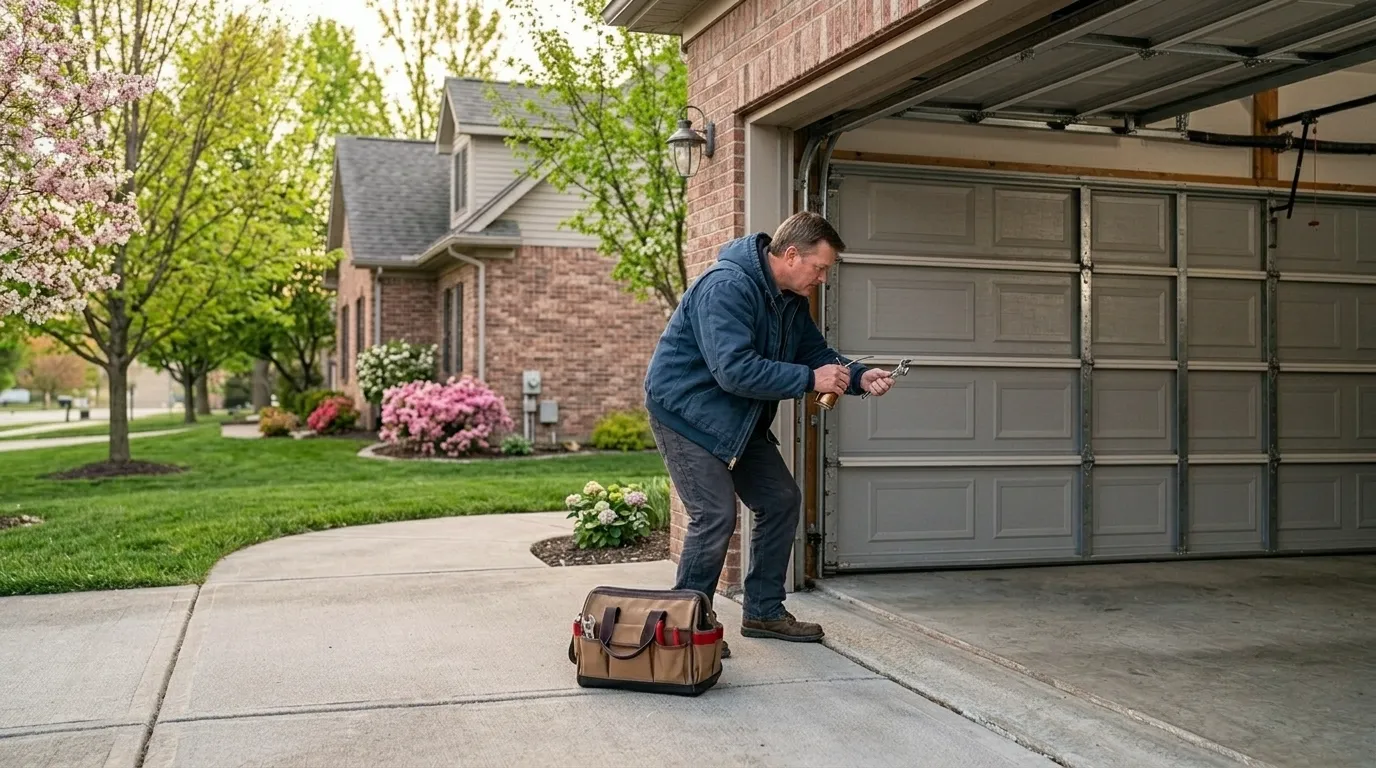
There's no branch office in Kasson. The truck comes out of Rochester, 14 miles up the road, and that's true for every call here - spring, opener, or a door that won't close square. It's a short enough run that it doesn't change how the job gets quoted or scheduled, but it's worth saying plainly instead of pretending there's a shop around the corner.
Kasson sits in a service area that covers close to 16,098 households across 17 named communities, and this town's roughly 2,555 households are a small, steady slice of that. The housing here skews newer than a lot of the surrounding towns - median build year 1993, versus 1982 across the wider area - which matters more than it sounds like it should. A door built in 1993 and a door built in 1978 fail in different ways, need different spring wire gauges, and often take different opener mounting hardware entirely. Knowing which decade a house came out of before the truck even leaves Rochester saves a wasted trip for the wrong part.
The call we get most out of Kasson is an opener that grinds, stalls halfway up, or reverses on its own before the door seats. Nine times out of ten it's not the opener - it's a torsion spring that's carried the door's weight since the house was framed, sometime around 1993, and has finally worn down to where the opener is doing the spring's job as well as its own.
A torsion spring is rated for a set number of open-close cycles, not a set number of years, but in a house built in the early '90s that number of cycles has usually been used up regardless. The opener strains, the gears inside it wear faster because they're compensating, and eventually something in the drive train gives before the spring does. By the time a homeowner calls about opener noise, the actual root cause is almost always upstream of the opener itself.
Two things stack on top of each other in Kasson. First, the age of the stock - a median build year of 1993 means a lot of original torsion springs are three decades old, well past any reasonable service life. Second, the climate band this whole area sits in is COLD and severe, and cold does something specific to a spring that's already tired: it stiffens the coil, thickens the grease on the shaft, and adds resistance right when the spring has the least reserve strength left to overcome it.
A spring that might have limped along another summer will often let go on the first hard cold snap of the season instead. It's not that cold breaks good springs - it's that cold finds the ones that were already close to done. That combination of an aging, mid-90s-era housing stock and a genuinely cold winter climate is what drives most of the repair calls out here, more than any one bad batch of hardware or a particular door brand.
Some of it, yes. Lubricating rollers and hinges, tightening loose track brackets, replacing worn weatherstripping along the bottom of the door - all reasonable weekend jobs, and none of them need a truck from Rochester.
Torsion springs are a different matter, and we'll say it plainly: don't. A wound torsion spring holds enough stored force to break fingers or worse, and the tools to safely wind or unwind one aren't something most homeowners keep in the garage. Opener logic boards are sometimes DIY-replaceable if you're comfortable with wiring, but if the board's failing because it's been overworked by a dying spring, swapping the board alone just buys a few more weeks before the same call comes back.
The honest limit here: if a door on a 1993-era house needs both new springs and a new opener at the same time, replacement is often the better math than repair. We'll say so on-site rather than stack two repair bills on a door that's earned retirement. See the Kasson service area for what else the run out here covers.
The truck carries torsion springs sized for the standard door heights that show up across the 1980s and '90s-era stock common to this part of the service area - single 16-foot doors and 8-foot doors both, since Kasson has a mix of both eras represented. Standard-lift cables, rollers, and the more common chain-drive opener parts ride along as well.
What doesn't ride along: less common torsion spring wire gauges from older, pre-1980 construction, and specialty opener boards tied to discontinued models. Those get ordered ahead of the visit once we know the make and the house's rough age. For the rest of what the company handles across the wider Rochester service area - not just this one town's parts list - see the main service page.
About 14 miles from Rochester. There's no branch location in Kasson itself - every job here is a scheduled trip out from the main shop, same as the rest of the service area.
Most houses in Kasson went up around 1993, and torsion springs are rated by cycle count, not calendar years. A big share of the town's original springs are hitting the end of that rated life around the same time, which is why the calls tend to cluster.
Cold doesn't break a healthy spring. It stiffens the coil and adds resistance, which is enough to finish off a spring that's already near the end of its cycle life from age. If your house is from the early '90s, that's usually the real cause underneath the cold snap.
If the opener's been straining against a worn spring, replacing only the opener buys a short reprieve before the new unit wears the same way. We'll tell you on-site if both need attention rather than sell a fix that won't hold.
Call now or request a free quote - same-day service on most repairs, upfront written pricing.