Rochester, MN · Garage Door Service
Off-track garage door repair for Kasson homes built mostly in the 1990s. We drive the 14 miles from Rochester with the rollers and track hardware that era actually uses.
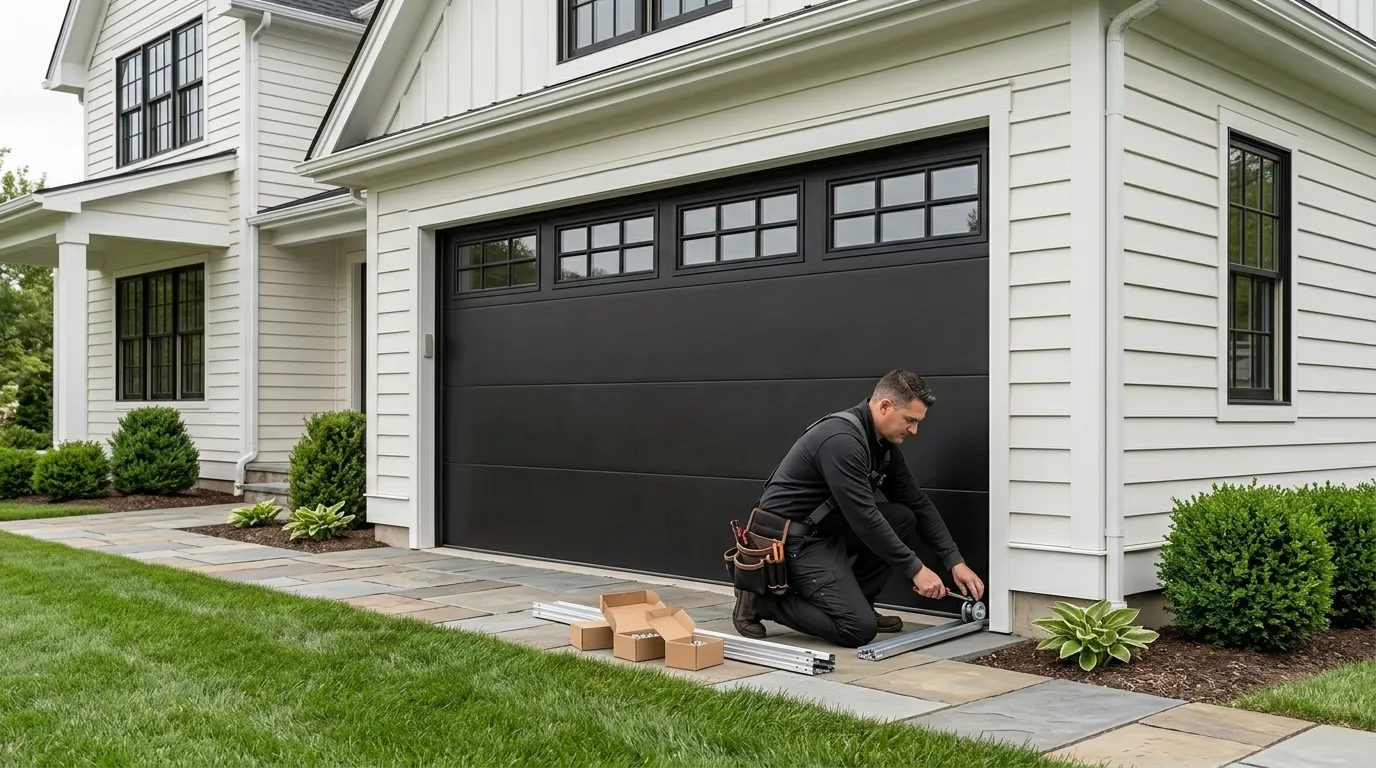
Kasson sits 14 miles out from our shop in Rochester, and that number shapes how a call here actually goes. It's far enough that we're not turning around twice in a morning for the same street - when we head out to Kasson, the truck goes loaded for what an off-track door in this town is likely to need, not a general assortment. That means checking the job details up front: door size, whether it's a single or double, roughly how old the house is. A 14-mile drive with the wrong roller in hand costs everyone an afternoon. We'd rather ask two extra questions on the phone than guess on the highway. This isn't a same-block, drop-by-in-ten-minutes kind of service area - Kasson is one of several towns we cover out from Rochester, and we plan the route and the parts together before the truck leaves.
An off-track door doesn't always look dramatic. Sometimes it's a panel that's cocked a few degrees where the roller has jumped the track, and the door still limps up and down on the opener. Other times one side hangs lower than the other, or the door stops moving altogether with the opener straining against it. You might hear a scrape or a bang right at the point the roller left the rail - that sound usually marks the moment it happened, whether that was last week or five minutes before you called. A door that's off track on one side but still closing is not a door to keep running through its cycle. Every cycle after the roller leaves the rail bends the track a little more, and a track that's bent enough has to be replaced rather than reseated.
Kasson's housing skews newer than a lot of what we see closer to Rochester - the median year built here runs around 1993, later than the broader service area's 1982 median. That matters for off-track failures because it points to a specific kind of hardware: steel roller tracks and torsion spring setups from the 1990s builder-grade wave, not the older extension-spring systems from the 1950s and 60s stock elsewhere in the area. Those newer track brackets were fastened light from the factory, and over three decades the lag screws holding them to the jamb work loose. A loose bracket lets the track flex sideways under the door's weight, and a flexing track eventually lets a roller ride off the edge. Add in a Minnesota winter - this area sits in a severe cold climate band - and shrinking wood framing pulls brackets further out of true just when spring steel is stiffest and least forgiving. That combination of newer builder hardware and hard winters is a pattern we see repeat across houses of this era.
If a roller has just barely nosed off the rail and the door is still sitting mostly square, some homeowners can walk it back onto the track by hand with the opener disconnected - that part isn't beyond a careful person with the door fully down and the springs at rest. Where we'd stop you is anything involving a bent track, a spring under tension, or a door that's dropped unevenly enough to bind. Torsion springs on these doors hold real force, and a track that looks slightly bowed is often further gone than it looks from the garage floor. We'll say plainly: if the door still moves and nothing looks bent, it may be a five-minute fix that doesn't need a truck from Rochester at all. If it's stuck, cocked, or came off with a bang, that's a call, not a project.
Because Kasson's homes mostly date to the builder-grade 1980s-90s wave rather than an older mix, the parts that solve most off-track calls here are common ones: standard steel roller tracks in typical residential widths, nylon and steel rollers, and the mounting brackets sized for that era's jamb construction. We're not chasing obsolete one-piece door hardware or oddball extension-spring configurations as often here as we might elsewhere in the service area. That said, we don't carry every gauge of track or every bracket variant on the truck at all times - a double-wide door with a custom-width track, or a heavier insulated panel door, can mean a short parts run before the job finishes. We'll tell you on site if that's the case rather than force a fit that won't hold.
Kasson is about 14 miles from our base in Rochester. We don't keep a branch there, so calls get routed with the drive built into the schedule. It doesn't change how the repair goes, but it does mean we plan the parts before leaving rather than guessing on site.
Kasson's homes mostly date to the 1980s and 90s, later than a lot of the wider area's 1982 median build year. That era used specific track brackets and torsion hardware, and after three decades those brackets loosen - that's the failure pattern we plan for on a Kasson call.
If the roller barely slipped and the door still sits square with the opener disconnected, some people can reseat it by hand. If the track looks bent or the door hangs unevenly, stop - a bent track under spring tension isn't a DIY fix, and forcing it can bend it further or let a spring release.
Usually, yes - Kasson's builder-grade 1990s hardware uses common track and roller sizes we stock regularly. A wider double door or an unusual bracket can mean a short parts run, and we'll tell you on site if that's the case rather than force a mismatched fit.
Call now or request a free quote - same-day service on most repairs, upfront written pricing.