Rochester, MN · Garage Door Service
Kasson runs about 2,555 households on mostly 1990s-era garage doors. We drive out from Rochester, 14 miles east, to fix openers that stall in the cold.
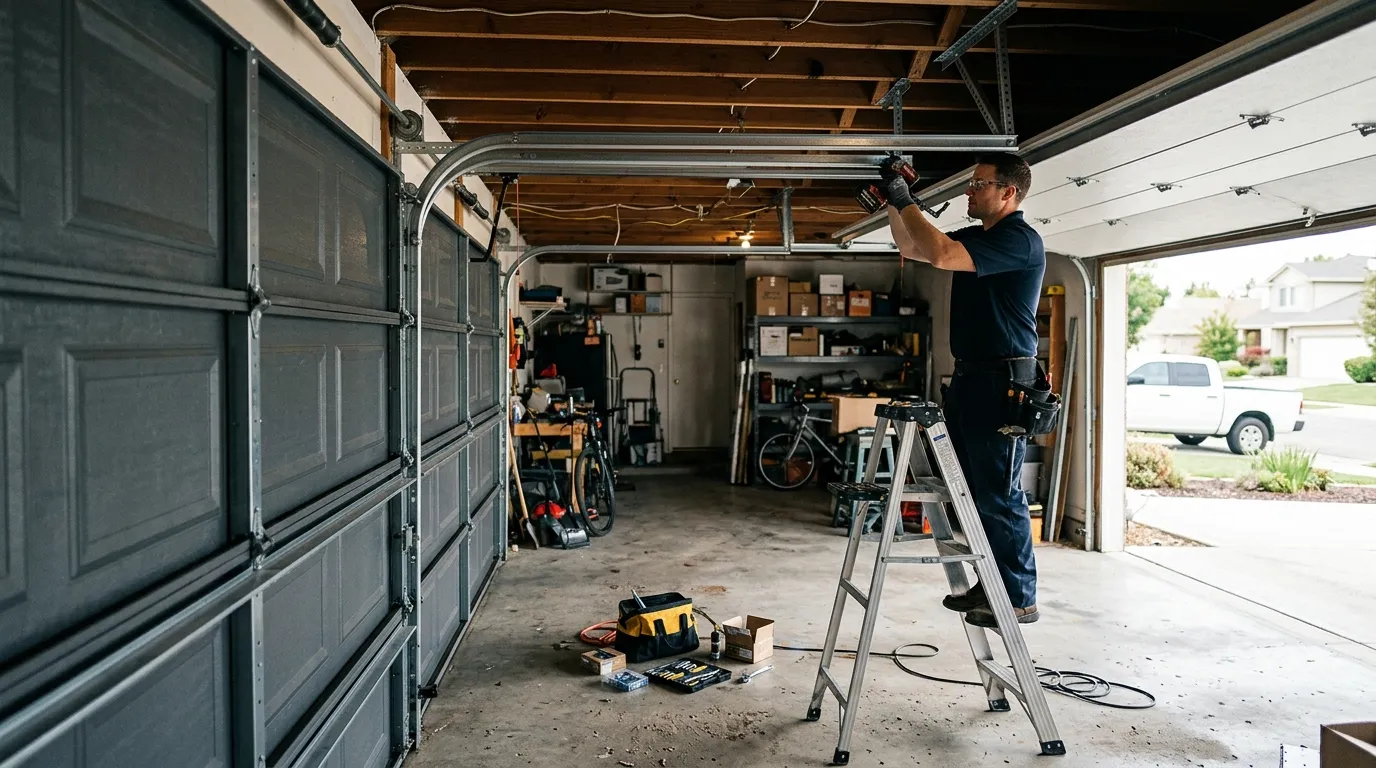
Kasson is a small town by household count - about 2,555 of them - which means we're not working a subdivision with three opener brands installed the same week by three different builders. Most of the openers we see here went in around the same stretch of years the houses did, so a technician who's worked one Kasson call has usually seen the model before he pulls into the next driveway. That's different from a Rochester day, where the range of ages and brands on a single street can be wider. We come out from Rochester, 14 miles west, so the call isn't a same-neighborhood drop-in - but once we're on site, the fix moves the same way it would anywhere: diagnose, quote, repair. We don't keep a branch or a truck stationed in Kasson, and we're not going to pretend otherwise. What we bring is a service area where this town's housing pattern is familiar territory, not a guess.
Because the town is this size, the opener problems tend to repeat across a handful of causes rather than sprawl across every era of technology sold since the 1970s. That narrows the diagnostic guesswork before we even open the truck.
The complaint we hear most from Kasson is an opener that runs the motor but the door doesn't move, or moves partway and reverses. On a house built around 1993 - the town's median build year - that's often a chain or belt drive opener old enough that the drive gear inside the unit has worn down to plastic dust, or a logic board that's started dropping the down-limit setting on cold mornings. The second most common call is a remote or wall button that's gone unresponsive, which on these vintage units usually traces to a worn contact strip rather than anything electronic.
We also get calls where the opener runs fine but the door groans, shudders, or lags a half-second before it lifts - that's the opener straining against hardware it was never sized for, which points at the door side of the system rather than the unit itself. Sorting out which is which, over the phone, before we drive 14 miles, is worth doing right the first time.
F3 covers it plainly: this is a cold-severe climate band, and that matters more for openers than most homeowners expect. Circuit boards and photo-eye sensors that sit low near a concrete slab floor pick up cold soak overnight, and a board that reads fine at 3pm can throw an error at 6am. On houses built in the 1993 range, a lot of the original openers are on their second or third decade, and the capacitors and drive gears inside were never built for this many freeze-thaw cycles.
The other pattern specific to a town this size: fewer households means fewer openers replaced on any given year's schedule, so a higher share of what we find is original equipment nobody's touched since installation. That's not a Kasson quirk exactly - it's what a median build year of 1993 and a household count in the low thousands adds up to. It means when we get called, we're usually not dealing with a five-year-old unit having a bad day; we're dealing with a thirty-year-old motor finally giving out.
Some of this is fair to tackle without calling anyone. Cleaning photo-eye lenses, checking that the sensors are aligned and not knocked out by a stray basketball, and replacing remote batteries are all things a homeowner can do in ten minutes with no risk. Reprogramming a remote or keypad is usually just a manual and some patience.
What we don't recommend doing yourself: opening the opener housing to touch the logic board, adjusting the travel limits without understanding spring tension on the door side, or replacing a drive gear kit on a chain unit without knowing how to release and reset chain tension safely. None of that is complicated for someone who does it daily, but it's also not the kind of mistake that costs a few dollars to fix if it goes wrong - a door that comes down wrong on a limit switch can drop faster than it should. If cleaning the sensors and swapping batteries doesn't fix it, that's the point to call rather than keep guessing.
We carry the parts that fail most on the era of opener Kasson runs - drive gear kits, logic boards for the common chain and belt-drive brands, photo-eye sensor pairs, and wall control stations. What we don't keep on the truck is every board for every opener sold since the 1980s; some older or less common units need a part ordered in, and we'll tell you that up front rather than promise a same-visit fix we can't deliver. Given the median build year here sits around 1993, most of what we find on a Kasson call matches what we've stocked for, but it's not a guarantee on every unit.
If a repair on an opener this old starts adding up - gear kit plus board plus sensor pair - we'll say so plainly, because at some point replacing the unit costs less than resurrecting it piece by piece.
No. We're based in Rochester and drive out to Kasson, about 14 miles, for service calls. We don't keep a depot or stock a separate truck locally - every job here is dispatched from the Rochester shop.
This area sits in a cold-severe climate band, and openers with circuit boards or photo-eye sensors mounted low near a concrete floor take the worst of overnight cold soak. A unit that runs fine in the afternoon can throw errors or refuse to close at dawn. It's a common complaint on older units especially.
It's possible. Kasson's median build year is around 1993, and a fair number of openers from that era are still the original unit, especially in a town this size where replacement cycles move slower than in a bigger market. If yours has never been swapped, worn drive gears and aging boards are the likely culprits.
Depends what's failing. A gear kit or sensor pair is a cheap fix on an otherwise sound unit. If you're looking at a board, a gear kit, and a sensor pair all at once, the repair cost starts closing in on a new opener, and we'll tell you when that math stops making sense.
Call now or request a free quote - same-day service on most repairs, upfront written pricing.