Rochester, MN · Garage Door Service
Panel replacement for Kasson homes built mostly in the 1990s, priced against a median income near $87,295. Rochester Garage Door Pros drives the 14 miles out.
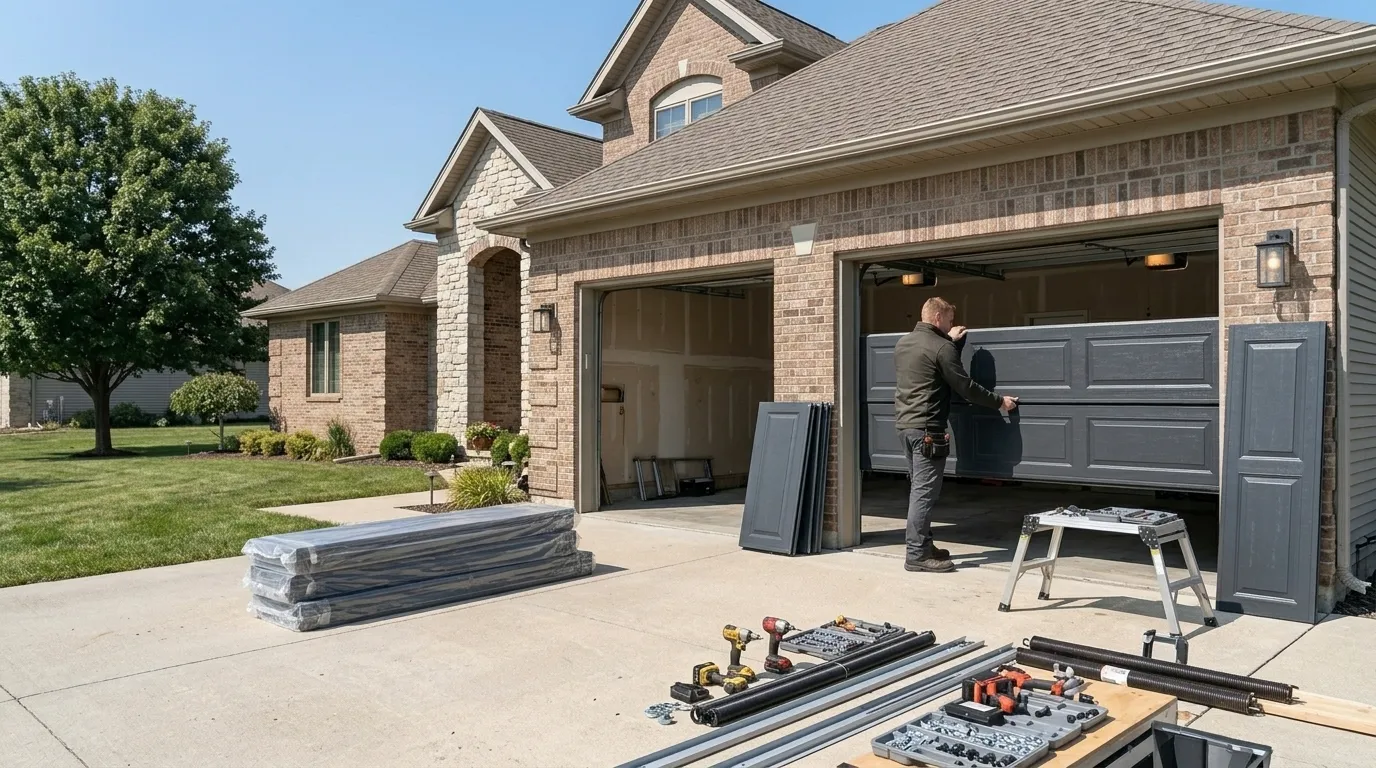
Kasson sits 14 miles from our shop in Rochester, and that drive is baked into how we schedule panel jobs out here. We don't keep a branch in town, so a panel replacement in Kasson gets bundled with the truck's route rather than dispatched same-hour the way a Rochester call might be. That's the honest limitation: if you need a single dented panel swapped before a specific date, tell us up front so we can plan the trip instead of squeezing it in.
Once we're on site, the labor itself doesn't change with distance - pulling a damaged panel, matching it to the existing section, and re-hanging the door on its track takes the same hour or two it would anywhere in the service area. What changes is that we're bringing the panel with us. Kasson homes, at a median build year of 1993, mostly run doors and hardware from a narrower window than the wider Rochester area's 1947-2001 spread, so we can usually pull the right stock section before we leave the shop rather than guessing at a range.
A cracked or bowed panel on a Kasson garage door almost always shows up on the bottom section first - the one that takes the brunt of scraping snow, road salt spray, and the occasional bumper tap backing out of a narrow driveway. You'll see a horizontal crease across the steel skin, or a corner that's folded in and no longer sits flush against the weatherstrip.
On 1990s-era doors, the panel is usually a steel sandwich with a thin foam core, and once that skin creases, the foam behind it starts to crumble rather than hold its shape. The door still opens and closes - the track and springs don't care about a dented panel - but the seal at that section is gone, and in a cold-winter climate that gap turns into a cold draft and a spot where ice forms along the bottom edge. That's the difference between a cosmetic problem and one that costs you on the heating bill.
Most of the damage we see on Kasson doors traces back to the same handful of causes tied to how these houses were built. With a median construction year of 1993, a lot of these garages were framed with driveways pitched tighter to the street than older lots, which means less room to correct a bad backing angle - the panel takes the hit instead of the bumper.
The other driver is straightforward Minnesota winter. This area sits in a cold, severe climate band, and steel panels contract in deep cold, which makes an already-stressed seam more likely to crack rather than flex under an impact that a warmer-weather panel would shrug off. Road salt tracked in on tires doesn't help either - it accelerates rust at any existing crease, which is why a small dent from two winters ago often turns into the crack you're calling about now.
If the damage is limited to one panel and the door still tracks straight, a determined homeowner can replace a single section with the right tools and a Saturday. The parts aren't the hard part - it's getting the door back in alignment on the track afterward without pinching a cable or throwing the whole panel run out of square.
Where we'd tell you to stop and call instead: if the crack runs into the section next to a hinge, if the door binds or drags after the dent happened, or if you're not sure the panel you ordered actually matches your track's roller spacing. On a door built to 1990s specs, a mismatched panel is a common and expensive mistake, since the section widths weren't standardized the way current stock is. Getting that wrong means paying for the part twice.
For Kasson's median build year of 1993, we carry steel panel sections and matching end stiles that fit the common door widths from that era's production runs, so a lot of jobs out here are a same-trip fix rather than a special order. What we don't keep on the truck are the older wood-composite panels or discontinued color-matched skins from doors near the front end of the area's 1947 to 2001 build range - those sometimes need a supplier order, and we'll tell you that on the estimate rather than after we've started.
Given a median household income of $87,295 in this stretch, we also walk most Kasson customers through the repair-or-replace math honestly: a single panel swap on a door that's otherwise sound is almost always the cheaper call, but if you're looking at two or more damaged sections plus worn rollers, putting that money toward a full door instead of chasing parts on an aging panel run is usually the better use of it.
The panel swap itself runs one to two hours once we're on site. The bigger factor is scheduling the 14-mile trip from Rochester - we don't keep a local branch in Kasson, so we route these jobs rather than dispatching same-hour.
For doors from Kasson's common 1990s build era, usually yes - we stock sections and end stiles sized to that period's common widths. Older doors near the front end of the area's build range sometimes need a supplier order, which we'll flag before we start work.
If the rest of the door tracks straight and the springs are sound, yes - a single panel swap is the cheaper fix. Once you're looking at multiple damaged sections plus worn hardware, the math often favors a full door over chasing individual parts.
This area sits in a cold, severe climate band. Steel panels contract in deep cold, so a section already stressed by a crease or old dent is more likely to crack under an impact it would otherwise survive in warmer weather.
Call now or request a free quote - same-day service on most repairs, upfront written pricing.