Rochester, MN · Garage Door Service
Oronoco homes mostly went up around 1998 with torsion-spring steel doors now aging out. We run the call from Rochester, 10 miles south, stocked for that hardware.
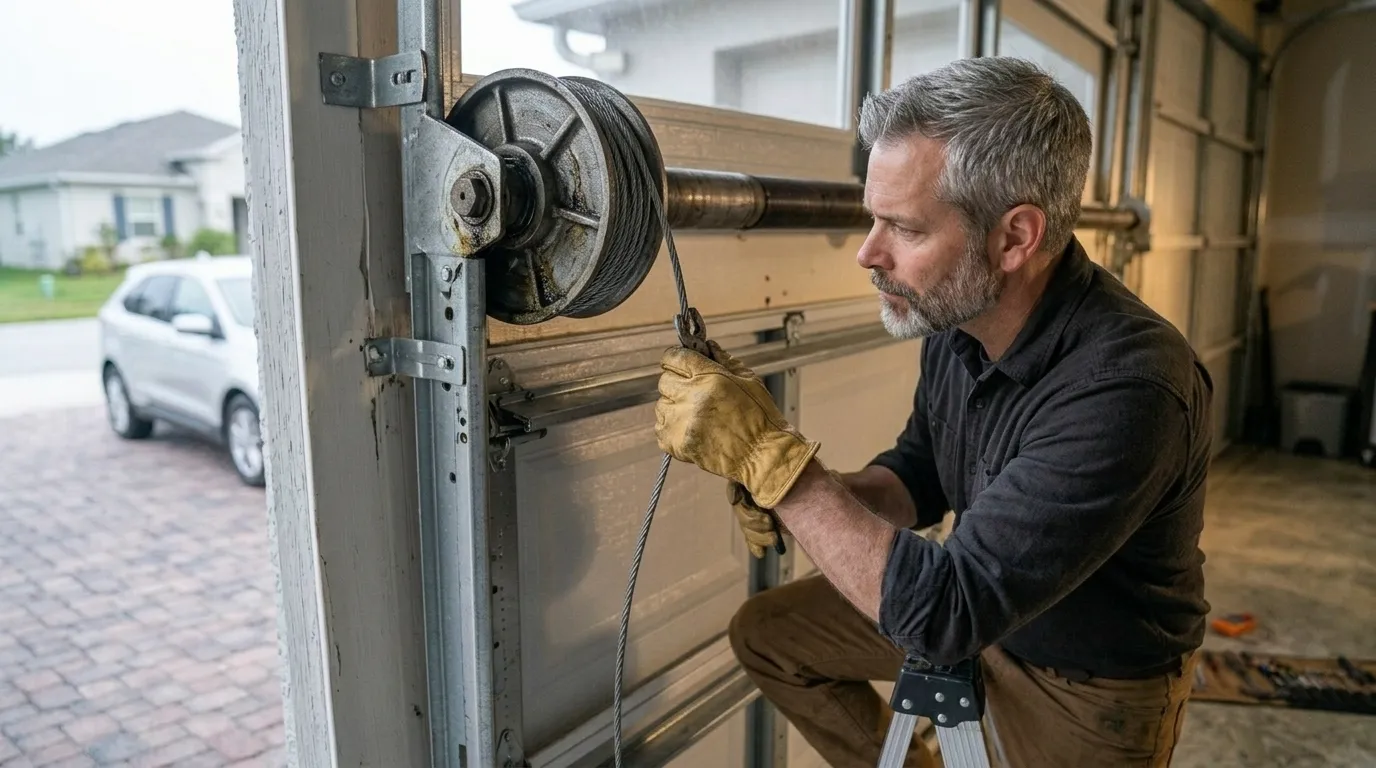
Oronoco is a different repair problem than most of the towns we cover out of Rochester. Across the wider service area, houses were built anywhere from 1947 to 2001, median around 1982, which means a real mix of extension-spring holdovers and early torsion setups. Oronoco skews much newer - its typical home went up around 1998. By then torsion springs on steel sectional doors were already the standard, chain and belt-drive openers had mostly replaced the older screw-drive units, and photo-eye safety sensors were code. That narrows what we're likely dealing with on a call here: fewer oddball extension-spring drums, more double-torsion setups on 16-foot doors, and openers old enough now that their circuit boards and gear sets are wearing out on schedule rather than by accident. We show up already knowing roughly what era of hardware we're opening the panel on, which cuts down on guesswork once the truck is in the driveway.
We don't keep a branch or a parked truck in Oronoco. The call routes from Rochester, about 10 miles south, so when you call we're scheduling a drive, not dispatching from around the corner. That's a fair trade for a town of only 548 households - no local garage door outfit sizes a dedicated crew for a market that small, and we'd rather tell you that straight than pretend otherwise. What that means practically: if you catch us early in the day, we can usually work Oronoco into the same afternoon's route. Late-evening emergencies may mean a first-thing-tomorrow slot instead of someone standing in your driveway at midnight. Tell us what the door is doing - won't budge, opener grinding, cable hanging loose - and whether the car is trapped inside or out. That decides how urgent the trip is and how we stage the truck before we leave Rochester.
Because Oronoco's housing runs newer than the area average, the truck carries what fits a late-1990s build: standard and high-cycle torsion springs sized for 16-foot double doors, chain and belt-drive opener parts, circuit boards for the openers that were common when these houses were built, and photo-eye sensor kits since those were already required equipment by 1998. We're less likely to be hunting down parts for an old extension-spring pulley system out here than we would be in some of the older pockets of the wider service area. The honest limit: if a door has a less common opener brand or a discontinued panel style, we may need to order that specific part rather than pull it off the truck, and that can mean a return trip instead of a one-visit fix. We'll tell you on-site if that's the case rather than promise a same-visit repair we can't back up.
Most emergency calls out of Oronoco come down to a handful of patterns: a torsion spring that lets go with a bang and leaves the door too heavy to lift by hand, a cable that's frayed through and jumped the drum, an opener that runs but the door won't move because the gear inside has stripped, or a door that reverses immediately because a safety sensor has drifted out of alignment. Less common but not rare: a bent track from a car bump, which on a door this age usually means the roller and track both need attention, not just a tap back into place. If the door won't move at all and the opener light is on, that's almost always spring or cable, not the opener itself - worth knowing before you call, since it changes what we load on the truck.
The climate band this whole service area sits in is classified as severe cold, and that's the thing most homeowners don't connect to a spring failure. Steel contracts in the cold, torsion springs lose a little tension every winter, and a spring that's been carrying a door for two decades of hard freeze-thaw cycles is closer to its breaking point than the same spring would be in a milder climate. Given that Oronoco's typical home is now around 25 years old, a lot of these doors are sitting right in the window where original torsion springs start going. Add a cold snap that stiffens the grease in an opener's gear housing or shrinks a metal track just enough to bind a roller, and a marginal spring finishes the job. It's not one dramatic cause - it's age plus cold, stacking up until something gives on an ordinary Tuesday morning.
We're not going to put a number on this page that we can't stand behind. Oronoco's median household income, $146,875, runs well above the $91,612 median for the wider Rochester area we serve, and in practice that shows up less in what a spring replacement costs and more in what people choose to do about it - a lot of Oronoco calls end in a full opener swap rather than a board repair, because the owner would rather not gamble on a 20-year-old unit twice. What actually drives your bill is the door: single spring versus double torsion, whether the cable or the drum went with it, and whether the opener needs a part or a replacement. We'll give you a number before we start work, not after.
No. We run out of Rochester, about 10 miles south, and dispatch the truck to Oronoco calls from there. There's no local branch or drop-in counter here, so booking ahead - even just a few hours ahead - gets you a tighter window than a same-hour walk-in request would.
The whole area sits in a severe cold climate band, and steel torsion springs lose tension with every hard freeze-thaw cycle. Combine that with Oronoco's housing stock now averaging around 25 years old, and a lot of original springs are simply reaching the end of their working life during a cold stretch.
If your house is typical for Oronoco, it was built around 1998, which puts most original openers at 20-plus years old. At that age, a board or gear failure often isn't worth patching - we'll tell you on-site whether a part swap makes sense or whether a full opener replacement is the better call.
We travel from Rochester, roughly 10 miles away, so response depends on when in the day you call and where the truck already is on its route. Early calls usually get worked into the same day; late-night emergencies may need a first-thing-tomorrow slot instead.
Call now or request a free quote - same-day service on most repairs, upfront written pricing.