Rochester, MN · Garage Door Service
Pine Island's garage doors mostly went in during the 1990s-2001 building push. That means aging torsion springs and worn opener parts, not old one-piece doors. Rochester-based crew, 15 miles out.
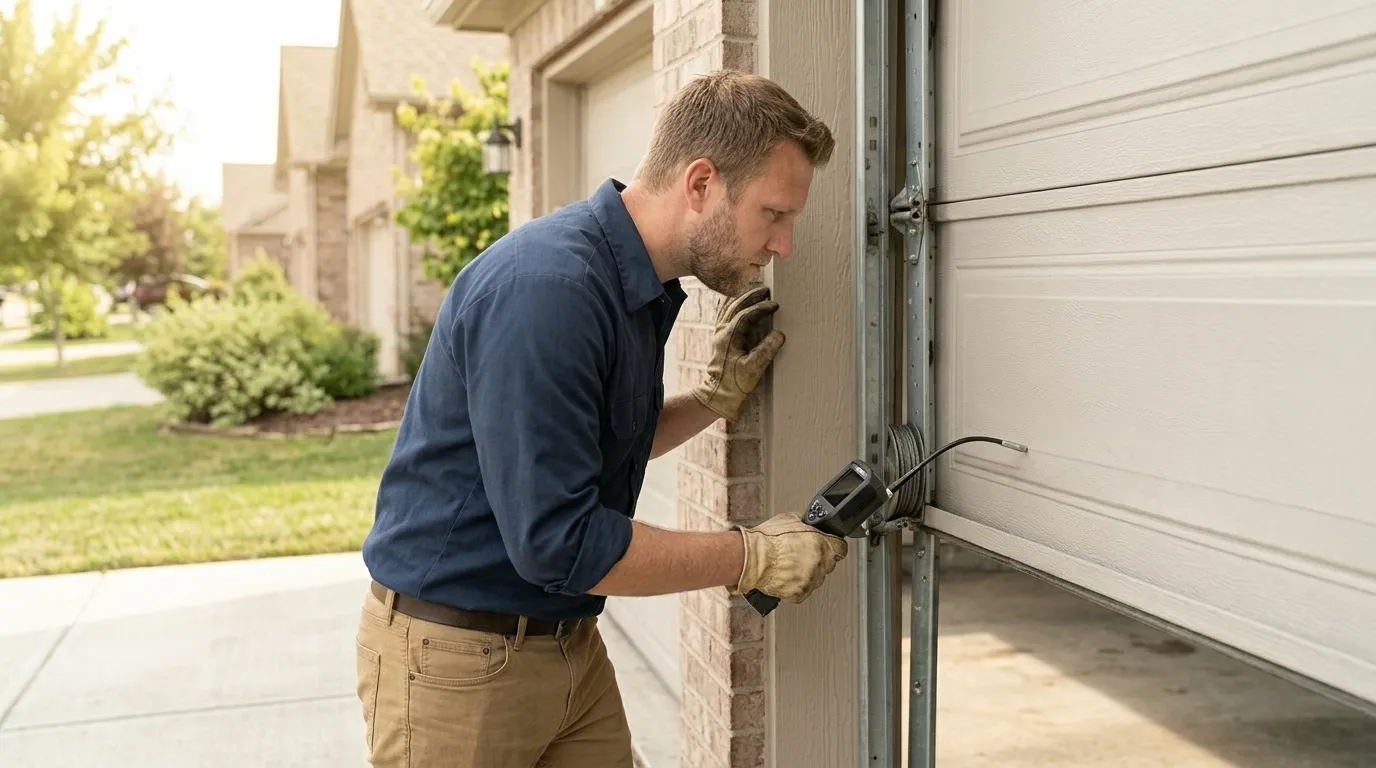
Most of the housing in Pine Island went up during the run that carried through 2001, later than a lot of the older neighborhoods closer to Rochester. That matters for what breaks. A door installed in the late 1990s isn't dealing with brittle single-piece wood panels or ancient extension springs bolted to the rafters - it's running a factory torsion spring on a steel sectional door, and that spring has a rated cycle life. Twenty-some years of daily use, two cycles a day, adds up to right around where springs start snapping without warning.
Add the climate on top of that. This is a cold-climate area with severe winter stress, and cold makes steel brittle and grease thick. A spring that's already near the end of its life doesn't need much of a cold morning to go. We also see openers from that same building era starting to fail - not catastrophically, just slow to respond, or tripping the safety reverse for no obvious reason. That's wear, not a defect, and it shows up on a predictable schedule tied to when the house was built.
We don't have a Pine Island-specific price list to hand you here, and quoting a number without seeing the door and spring size would be a guess dressed up as a fact. What we can tell you is that the math usually comes down to spring size, door weight, and whether the opener needs work at the same time as the spring - those three things drive the job, not the town.
One honest note: if you're getting quoted a full door replacement for what's actually just a spring or a bent roller, get a second look before you sign off. A door built in the 1990s or early 2000s with sound panels almost always makes more financial sense to repair than replace, especially with income levels in this area sitting well above what usually forces a straight teardown-and-replace call.
We run out of Rochester, and Pine Island sits about 15 miles from there, so a visit here gets built into a route rather than promised as a same-hour drop-in. That's not a knock on the town - it's just honest about drive time, and we'd rather tell you that up front than have you waiting on a truck that isn't close.
When you call, tell us the door's approximate age if you know it - most Pine Island doors trace back to construction between the 1980s and 2001 - and whether the spring is broken (door won't lift, or one side sags) or the opener's acting up (grinds, reverses, or won't respond to the remote). That gets the right parts on the truck before we're on the road.
The two most common calls we take from this area are a snapped torsion spring and a failing opener logic board or sensor, both tied to the same building-era wear pattern. A broken spring on a double door is not a DIY fix - the spring is under enough tension to cause real injury, and it needs a properly sized replacement, not a universal one grabbed off a shelf.
Less dramatic but just as common: worn rollers and stretched cables on doors that have been cycling for two decades in a cold-climate area. Freeze-thaw swelling in the track, combined with grease that's thickened in winter temperatures, puts extra strain on the cable drum. Left alone, a stretched cable eventually slips the drum, and the door comes down unevenly or not at all. Photo-eye sensors knocked out of alignment by a bumped car or a shifted bracket are common too, and they're often mistaken for a dead opener when the fix is a five-minute realignment.
For a broken torsion spring, the job is straightforward: unwind and remove the old spring safely, measure the door for the correct wire size and wind, install the matching spring, and balance the door so it holds at any height without the opener straining. On a door built in the late 1990s or early 2000s, the hardware is usually standard enough that parts aren't a problem.
For opener issues, we start with the simple stuff - sensor alignment, wiring at the header, travel limits - before we talk about a logic board or full unit swap. Replacing an opener outright only makes sense when the motor itself is failing, not every time it acts up. Cable and roller work is a matter of pulling tension off the door safely, swapping the worn part, and re-tensioning - routine work, but not safe to do with the door under load.
The building era is different. Pine Island's housing mostly dates from the 1980s through 2001, later than a lot of the area closer to Rochester. That means factory torsion springs and standard steel sectional doors rather than the older one-piece doors and mismatched hardware that show up on older streets - the failure pattern skews toward spring fatigue and opener wear, not obsolete parts.
About 15 miles from Rochester. We still cover it, but we're upfront that a visit gets scheduled into a route rather than promised as an immediate drop-in, since we're driving in rather than starting from a location in town.
No. A torsion spring on a residential door holds enough tension to cause serious injury if it lets go while you're working on it. It also needs to be sized correctly for your door's weight, which isn't a guess-and-check job. Call it in.
If the panels and track are sound, which is common on doors built in the 1990s or early 2000s, repairing the spring or opener almost always costs less and solves the actual problem. Full replacement makes sense when the panels are damaged, rusted through, or the door's structurally out of square.
Call now or request a free quote - same-day service on most repairs, upfront written pricing.