Rochester, MN · Garage Door Service
Stewartville homes built around 1987 mostly run steel sectional doors on extension or torsion cables. We drive out from Rochester, 11 miles away, to fix snapped or frayed cables.
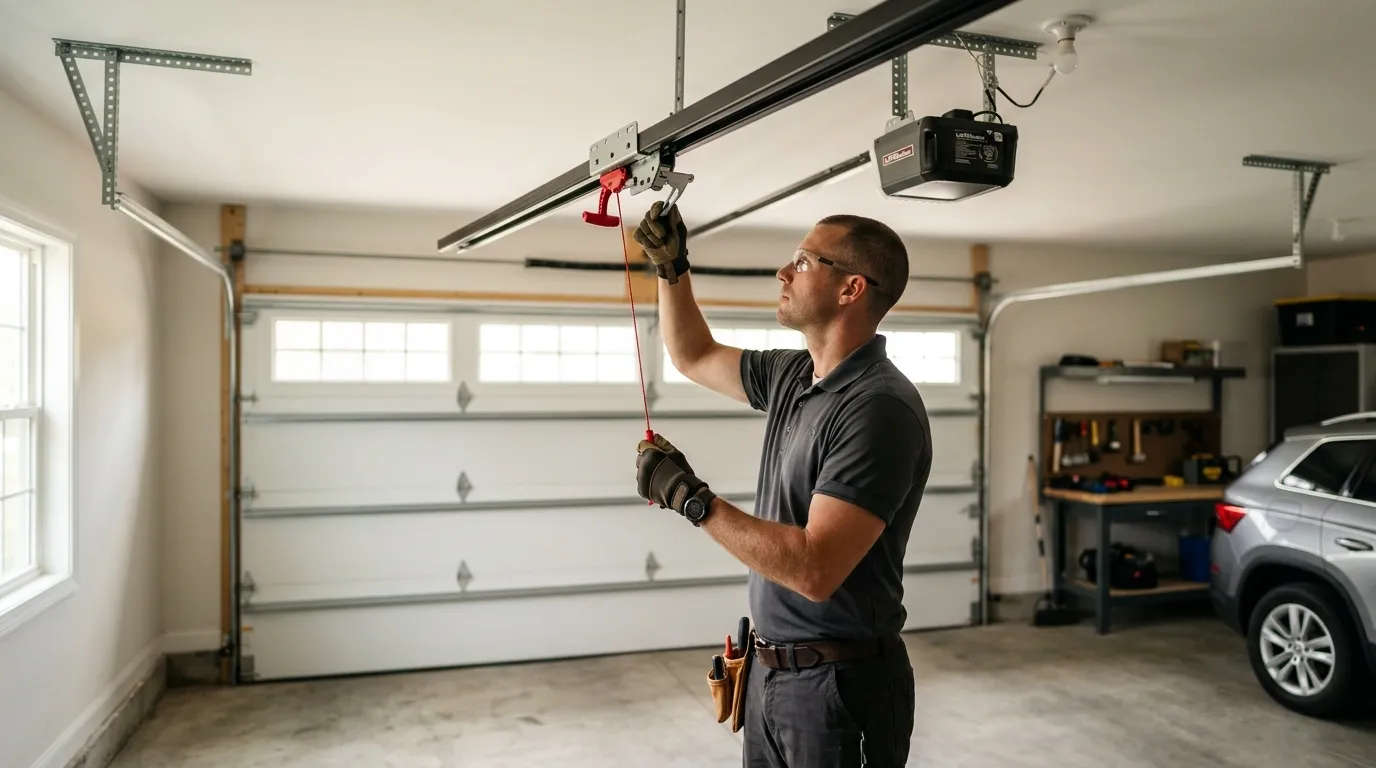
Most garages in Stewartville went up around 1987, and that era means steel sectional doors, usually a 16x7 double or a 9x7 single, hung on galvanized lift cables running to a drum at each end of the torsion shaft. Some of the older single-car setups from that same build wave still run extension springs with a separate safety cable threaded through the coil. We carry both cable types and the drums that go with them, sized for the standard track drop you find on a door this age, so a truck out of Rochester doesn't need a second trip to source a part that fits a house built in the Reagan years.
What we don't stock is anything custom - a door that's been resized, cut down, or fitted with a track someone welded up in a shop. If that's what's behind your panel, we'll tell you on site rather than guess, and it may mean ordering in before the cable gets replaced.
A cable job on a torsion system means winding down the spring first, pulling the old cable off the drum, seating the new one, and re-tensioning before the door ever moves under power again. Get the winding cones wrong and the door either won't seal at the floor or slams down uneven on one side - a real risk on the wider 16-foot doors that are common on the newer garages built into this same stretch of housing stock. On extension-spring doors it's simpler: unhook the pulley, swap the cable, rehook, check the safety cable is still threaded through the coil so a broken spring can't whip loose.
Either way, both cables get replaced together, not just the one that snapped. The second one is carrying the same age and the same wear, and a mismatched pair puts uneven pull on the door the next time it opens.
A torsion spring under tension can put someone in the hospital, and cable work on that system means working next to a loaded spring even when the spring itself looks fine. That's not a DIY call. If you've got an extension-spring door and the spring is already relaxed with the door down, swapping a snapped cable is more forgiving, but you're still working with a garage door heavy enough to break fingers if the drum lets go while you're threading it.
We'd rather you call and describe what you're looking at than have you improvise a fix that holds for two weeks and then fails when the door's halfway up.
A straight cable swap on one side, torsion or extension, runs about the time it takes to wind down the spring, thread the new cable, and re-tension - most of that job is the winding, not the cable itself. If both cables need replacing, or the drums show wear from a cable that jumped its groove, the visit runs longer. We're driving the 11 miles out from Rochester for every call here, so we bring both cable types and drum sizes on the truck rather than diagnosing on site and coming back.
We don't have a published number for this job to quote here, and any figure we gave you without seeing the door - torsion versus extension, one cable or two, drum wear or clean - would just be a guess dressed up as a fact. What we can tell you is that a two-cable job costs more than a one-cable job, and a job that also needs a drum or a cable pulley runs higher than a clean cable-only swap. Ask for a number when you call and we'll give you one after a look at the actual hardware, not before.
The most common failure on doors from this build era is a cable that's frayed against a rusted or nicked drum rather than snapped clean - if the drum caused the fray, replacing just the cable means it frays again in a season or two. Cold matters here too: Minnesota winters make steel cable more brittle at the strand level, and a cable that's been fraying slowly through a few cold snaps can let go all at once on a mild day when nobody expects it. If your door has been slamming the last inch instead of settling, or one side drops faster than the other, that's usually the cable telling you before it breaks all the way. Waiting on that noise instead of calling it in is the one thing that turns a cable job into a spring job, a drum job, or worse - a door coming off track entirely.
About 11 miles. We run the job from Rochester rather than keeping a separate branch here, so scheduling depends on the day's route, but the parts and tools for a standard cable job on a door from this area's housing stock are on the truck either way.
It usually means a steel sectional door on torsion or extension cables with standard drum sizes, which is the hardware we stock. Older or resized doors sometimes run non-standard tracks, and those can need a part ordered in before the cable gets swapped.
Both cables carry the same age and the same wear from the same door. Replacing only the snapped one leaves a mismatched pair pulling unevenly, which is often what causes the second cable to go within the next year.
Call now or request a free quote - same-day service on most repairs, upfront written pricing.