Rochester, MN · Garage Door Service
Stewartville homes mostly date to 1987, many still running original torsion hardware. New garage door installs here are built for severe Minnesota winters.
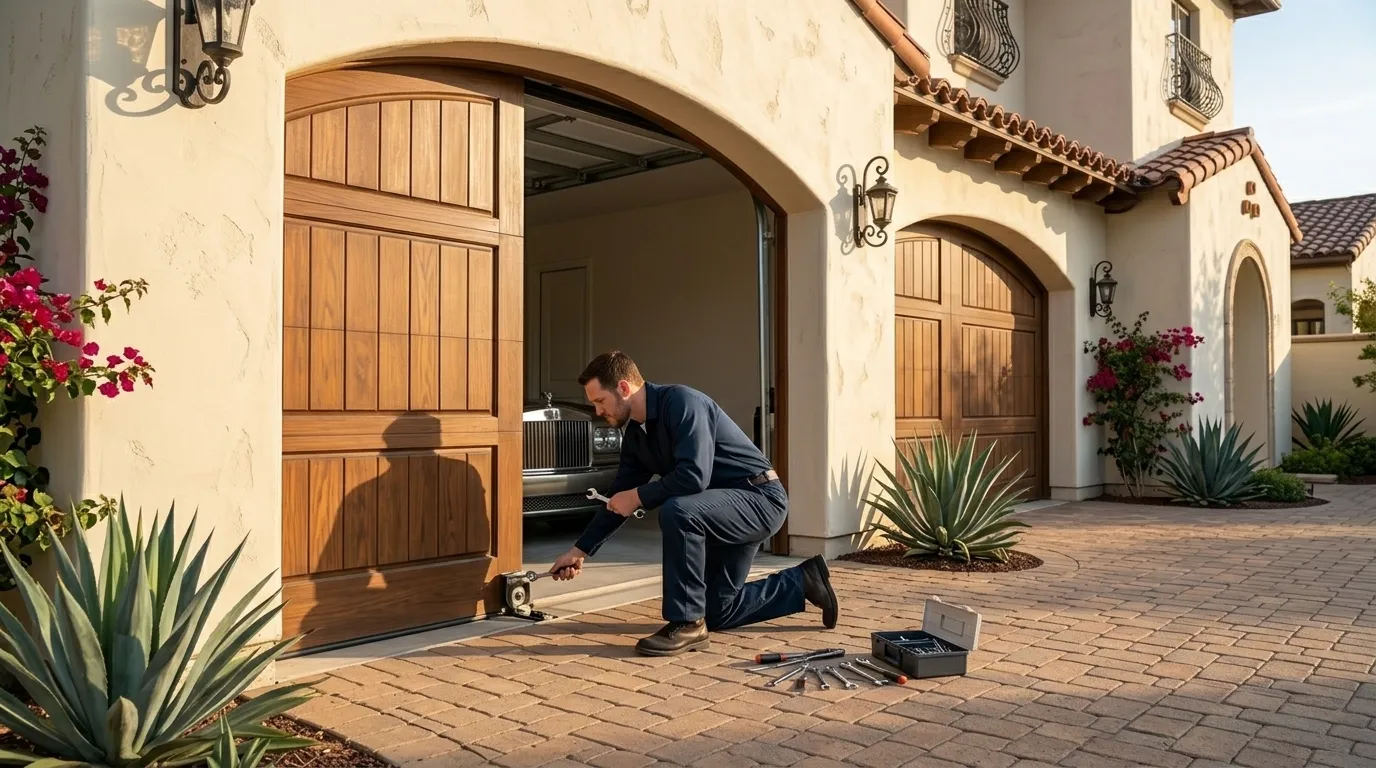
Most houses in Stewartville went up around 1987, which sits a few years past the wider Rochester-area median of 1982 and inside the 1947-2001 range we see across the region. That matters because a door installed when the house was built is often still wearing its original torsion spring, its original 1/3-horse chain-drive opener, and its original steel track brackets - nobody upgrades those unless something breaks. We keep torsion springs sized for the standard 7-foot and 8-foot openings common to that era, plus the wind-load hardware that severe-cold climates call for: heavier end bearings, insulated steel or composite panels, and weatherstrip rated to hold seal at sub-zero temperatures instead of cracking. If your opener is the original unit from a late-80s build, we also carry mounting brackets that match the older rail style, since newer openers ship with a different bolt pattern. We don't stock every custom panel color or every smart-opener brand - special orders on those can add a few days. For a look at what else we cover from the Rochester side, see our garage door installation page.
A new install starts with pulling the old door, track, and spring assembly - on a house from the late 1980s that's usually a one-piece torsion spring over a single 16-foot double opening or a 9-foot single, depending on the garage. We check the header and jambs for square, since decades of settling on homes from this build era can leave the opening slightly out of true, which changes how the new track gets shimmed. Then it's new vertical track, new horizontal track pitched to the ceiling height, a torsion spring matched to the door weight, and cabling run to the new opener bracket. Cold-climate builds get a bottom seal designed to stay flexible below zero rather than stiffening and letting drafts through, which is worth the few extra dollars given how far winter temperatures drop here. We test balance by hand before the opener ever gets bolted on - a door that doesn't balance right will burn out an opener motor inside a year, no matter how good the opener is.
Installing the door itself - hanging panels, setting track, hooking up an opener - isn't the dangerous part. The torsion spring is. It's wound under enough tension to break a hand or worse if you don't have the right winding bars and don't know the turn count for your door's weight and drum size, and that number isn't printed anywhere obvious. If you're comfortable with basic carpentry and have a helper, swapping panels and track on a straightforward single door is within reach for some homeowners. We wouldn't recommend anyone without spring experience touch the torsion assembly, full stop. That's not us protecting the job - it's the actual injury pattern on garage door work, and it's the same reason most manufacturers won't warranty a spring installed by an unlicensed hand.
A straightforward single-door swap on a house with standard framing runs about half a day once we're on site - old door out, new track and spring set, opener remounted, balance checked. A double door, or a door where the opening needs correcting because the house has settled unevenly, takes longer. Anything custom-ordered, like a specific panel style or an insulated door in a size outside our stocked range, adds lead time before the job even starts, since that material isn't sitting on the truck. We travel from Rochester to reach Stewartville, so scheduling accounts for that drive - we don't keep a branch or standing crew in town, and we won't claim otherwise.
We don't have a posted price list for this page, and giving you a made-up number would do more harm than good - too many variables change it: door size, insulation level, whether the opener needs replacing too, and whether the framing needs correcting before the new track goes in. What we can tell you is what drives the cost up or down. A single-car opening with a basic steel door and a reused opener costs less than a double-car insulated door with a new opener and smart controls. Homes here built around the late 1980s sometimes need bracket or header work that a newer build wouldn't, since original framing hardware from that period wasn't always sized for today's heavier insulated panels. Ask for a walk-through quote before you commit - it's the only way to get a real number instead of a guess.
The most common surprise on a house from this build era is discovering the header above the opening was never reinforced for a heavier door, which only shows up once the old lightweight panel comes off. Cold is the other recurring issue - a door installed without cold-rated seals and lubricant will stiffen and bind by the first hard freeze, and steel panels without a thermal break will sweat and rust from the inside over a few winters in this climate. Openers matched to the wrong door weight burn out early, usually within the first year, which is why balance gets checked before anything gets bolted down. None of this is common on every job, but it's common enough here that we plan for it rather than treat it as a surprise.
Likely yes, at least in part. Most homes in Stewartville date to around 1987, and torsion springs, track, and openers from that period were rarely replaced unless something failed. If you've never had a repair or upgrade, assume the spring and track are original and budget for full replacement rather than a patch.
No. We run out of Rochester and travel out to Stewartville for installs. There's no local branch or depot here, so scheduling factors in the drive from Rochester rather than a same-town response.
A basic uninsulated steel door will move air and can develop condensation issues in a severe-cold climate like this one. We stock insulated panels and cold-rated weatherstrip specifically because uninsulated doors underperform once temperatures drop well below freezing for extended stretches.
Sometimes. It depends on the opener's age, horsepower rating, and whether the new door's weight matches what the opener was built to lift. An opener from a house built in the late 1980s is often underpowered for a modern insulated door, so we check the weight match before recommending reuse.
Call now or request a free quote - same-day service on most repairs, upfront written pricing.